
![ISO Certified Reference Material Purity Degree 99% CAS No. 15629-92-2 [1 3-Bis (diphenylphosphino) Propane]Nickel (II)](https://acfchemical.com/wp-content/uploads/2026/01/High-Purity-Dmt-CAS-120-61-6-Powder-Agrochemical-and-Syntheses-Material-Int1.webp)
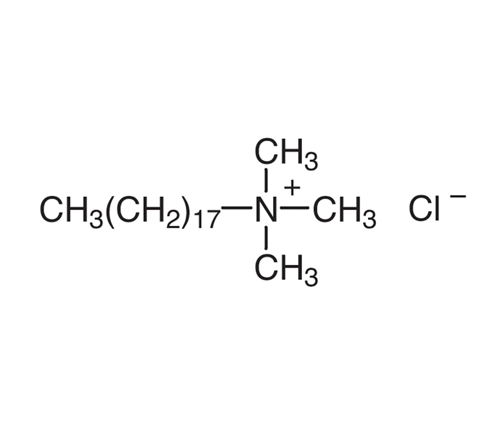
Trimethylstearylammonium Chloride CAS Number: 112-03-8
| Product | Trimethylstearylammonium Chloride |
| CAS | 112-03-8 |
| Formula | C21H46ClN |
| Synonym | TC-8;Octadecy trimethyl ammonium chloride;OCTADECYLTRIMETHYLAMMONIUM CHLORIDE;STAC;stearyl trimethyl ammoium chloride;STEARYLTRIMETHYLAMMONIUM CHLORIDE;Steartrimonium chloride |
product description
Product Information
Product name:Octadecyl trimethyl ammonium chloride
CAS:112-03-8
MF:C21H46ClN
MW:348.05
Flash point:180°C
Density:0.884 g/cm3
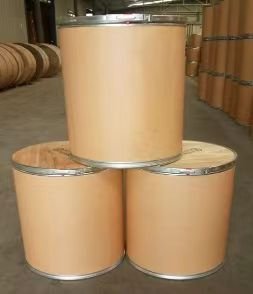
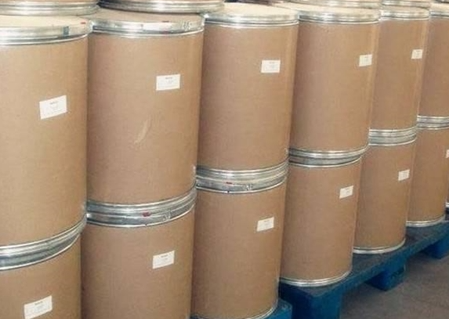
Package:1 kg/bag, 20 kg/drum, 25 kg/drum
It is widely used in asphalt emulsification and waterproof coating emulsification, silicone oil emulsification, hair conditioner, cosmetics emulsification conditioning, fabric fiber softness and antistatic, organic bentonite modification, water treatment flocculation, glass fiber softness processing, nylon parachute surface anti burning agent, oil color cosmetics additive, hair conditioner, soft softener, disinfectant, etc.
1. Cosmetics and Personal Care Products: It is often used in the formulation of conditioners, creams, and lotions to improve texture and provide conditioning benefits.
2. Medicine: It can be used as an excipient in pharmaceutical preparations to help enhance the solubility and stability of active ingredients.
3. Industrial Applications: It is used in the production of emulsions, dispersions and as a lubricant in various industrial processes.
4. Antibacterial agent: Due to its quaternary ammonium structure, it may exhibit antibacterial properties and can be used in disinfectants and sanitizers.
5. Textile and leather industry: can be used as a softener to improve the feel of fabrics and leather.
SAFETY DATA SHEETS
SECTION 1: Identification
1.1GHS Product identifier
| Product name | Trimethyloctadecylammonium chloride |
|---|
SECTION 2: Hazard identification
2.1Classification of the substance or mixture
Acute toxicity – Category 4, Oral
Acute toxicity – Category 3, Dermal
Skin corrosion, Sub-category 1C
Serious eye damage, Category 1
Hazardous to the aquatic environment, short-term (Acute) – Category Acute 1
Hazardous to the aquatic environment, long-term (Chronic) – Category Chronic 1
2.2GHS label elements, including precautionary statements
| Pictogram(s) | 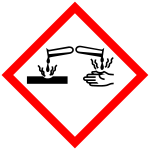 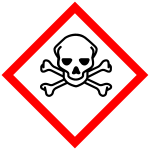 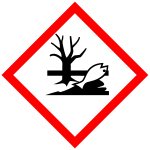 |
|---|---|
| Signal word | Danger |
| Hazard statement(s) | H302 Harmful if swallowed
H311 Toxic in contact with skin H314 Causes severe skin burns and eye damage H410 Very toxic to aquatic life with long lasting effects |
| Precautionary statement(s) | |
| Prevention | P264 Wash … thoroughly after handling.
P270 Do not eat, drink or smoke when using this product. P280 Wear protective gloves/protective clothing/eye protection/face protection/hearing protection/… P260 Do not breathe dust/fume/gas/mist/vapours/spray. P273 Avoid release to the environment. |
| Response | P301+P317 IF SWALLOWED: Get medical help.
P330 Rinse mouth. P302+P352 IF ON SKIN: Wash with plenty of water/… P316 Get emergency medical help immediately. P321 Specific treatment (see … on this label). P361+P364 Take off immediately all contaminated clothing and wash it before reuse. P301+P330+P331 IF SWALLOWED: Rinse mouth. Do NOT induce vomiting. P363 Wash contaminated clothing before reuse. P304+P340 IF INHALED: Remove person to fresh air and keep comfortable for breathing. P305+P351+P338 IF IN EYES: Rinse cautiously with water for several minutes. Remove contact lenses, if present and easy to do. Continue rinsing. P305+P354+P338 IF IN EYES: Immediately rinse with water for several minutes. Remove contact lenses, if present and easy to do. Continue rinsing. P317 Get medical help. P391 Collect spillage. |
| Storage | P405 Store locked up. |
| Disposal | P501 Dispose of contents/container to an appropriate treatment and disposal facility in accordance with applicable laws and regulations, and product characteristics at time of disposal. |
2.3Other hazards which do not result in classification
no data available
SECTION 3: Composition/information on ingredients
3.1Substances
| Chemical name | Common names and synonyms | CAS number | EC number | Concentration |
|---|---|---|---|---|
| Trimethyloctadecylammonium chloride | Trimethyloctadecylammonium chloride | 112-03-8 | 203-929-1 | 100% |
SECTION 4: First-aid measures
4.1Description of necessary first-aid measures
If inhaled
Move the victim into fresh air. If breathing is difficult, give oxygen. If not breathing, give artificial respiration and consult a doctor immediately. Do not use mouth to mouth resuscitation if the victim ingested or inhaled the chemical.
Following skin contact
Take off contaminated clothing immediately. Wash off with soap and plenty of water. Consult a doctor.
Following eye contact
Rinse with pure water for at least 15 minutes. Consult a doctor.
Following ingestion
Rinse mouth with water. Do not induce vomiting. Never give anything by mouth to an unconscious person. Call a doctor or Poison Control Center immediately.
4.2Most important symptoms/effects, acute and delayed
no data available
4.3Indication of immediate medical attention and special treatment needed, if necessary
no data available
SECTION 5: Fire-fighting measures
5.1Suitable extinguishing media
Use dry chemical, carbon dioxide or alcohol-resistant foam.
5.2Specific hazards arising from the chemical
no data available
5.3Special protective actions for fire-fighters
Wear self-contained breathing apparatus for firefighting if necessary.
SECTION 6: Accidental release measures
6.1Personal precautions, protective equipment and emergency procedures
Avoid dust formation. Avoid breathing mist, gas or vapours.Avoid contacting with skin and eye. Use personal protective equipment.Wear chemical impermeable gloves. Ensure adequate ventilation.Remove all sources of ignition. Evacuate personnel to safe areas.Keep people away from and upwind of spill/leak.
6.2Environmental precautions
Prevent further spillage or leakage if it is safe to do so. Do not let the chemical enter drains. Discharge into the environment must be avoided.
6.3Methods and materials for containment and cleaning up
Collect and arrange disposal. Keep the chemical in suitable and closed containers for disposal. Remove all sources of ignition. Use spark-proof tools and explosion-proof equipment. Adhered or collected material should be promptly disposed of, in accordance with appropriate laws and regulations.
SECTION 7: Handling and storage
7.1Precautions for safe handling
Handling in a well ventilated place. Wear suitable protective clothing. Avoid contact with skin and eyes. Avoid formation of dust and aerosols. Use non-sparking tools. Prevent fire caused by electrostatic discharge steam.
7.2Conditions for safe storage, including any incompatibilities
Store the container tightly closed in a dry, cool and well-ventilated place. Store apart from foodstuff containers or incompatible materials.
SECTION 8: Exposure controls/personal protection
8.1Control parameters
Occupational Exposure limit values
no data available
Biological limit values
no data available
8.2Appropriate engineering controls
Ensure adequate ventilation. Handle in accordance with good industrial hygiene and safety practice. Set up emergency exits and the risk-elimination area.
8.3Individual protection measures, such as personal protective equipment (PPE)
Eye/face protection
Wear tightly fitting safety goggles with side-shields conforming to EN 166(EU) or NIOSH (US).
Skin protection
Wear fire/flame resistant and impervious clothing. Handle with gloves. Gloves must be inspected prior to use. Wash and dry hands. The selected protective gloves have to satisfy the specifications of EU Directive 89/686/EEC and the standard EN 374 derived from it.
Respiratory protection
If the exposure limits are exceeded, irritation or other symptoms are experienced, use a full-face respirator.
Thermal hazards
no data available
SECTION 9: Physical and chemical properties and safety characteristics
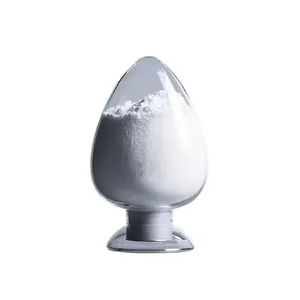
| Physical state | Solid. Powder. |
|---|---|
| Colour | White. |
| Odour | no data available |
| Melting point/freezing point | 104 °C. Remarks:Melting temperature range: 95-104°C. |
| Boiling point or initial boiling point and boiling range | 249 °C. Remarks:Boiling temperature range: 235 to 249ºC. |
| Flammability | no data available |
| Lower and upper explosion limit/flammability limit | no data available |
| Flash point | no data available |
| Auto-ignition temperature | no data available |
| Decomposition temperature | no data available |
| pH | no data available |
| Kinematic viscosity | no data available |
| Solubility | In water: 49 mg/L. Temperature:25 °C. pH:7. Remarks:Critical micelle concentration (CMC)..N-octanol. Remarks:Analysed using LCMS. |
| Partition coefficient n-octanol/water | Pow = 4 081.6. Temperature:25 °C.;log Pow = 3.61. Temperature:25 °C. |
| Vapour pressure | < 0 Pa. Temperature:20 °C. Remarks:I.e., equivalent to.;< 0 Pa. Temperature:25 °C. Remarks:I.e., equivalent to. |
| Density and/or relative density | 0.91 g/cm³. Temperature:20 °C. |
| Relative vapour density | no data available |
| Particle characteristics | no data available |
SECTION 10: Stability and reactivity
10.1Reactivity
no data available
10.2Chemical stability
no data available
10.3Possibility of hazardous reactions
no data available
10.4Conditions to avoid
no data available
10.5Incompatible materials
no data available
10.6Hazardous decomposition products
no data available
SECTION 11: Toxicological information
Acute toxicity
- Oral: LD50 – rat (female) – 702.5 mg/kg bw.
- Inhalation: no data available
- Dermal: LD50 – rabbit (male) – 1 300 mg/kg bw.
Skin corrosion/irritation
no data available
Serious eye damage/irritation
no data available
Respiratory or skin sensitization
no data available
Germ cell mutagenicity
no data available
Carcinogenicity
no data available
Reproductive toxicity
no data available
STOT-single exposure
no data available
STOT-repeated exposure
no data available
Aspiration hazard
no data available
SECTION 12: Ecological information
12.1Toxicity
- Toxicity to fish: LC50 – Danio rerio (previous name: Brachydanio rerio) – 0.064 mg/L – 96 h. Remarks:Based on ca. 91.6% purity.
- Toxicity to daphnia and other aquatic invertebrates: EC50 – Daphnia magna – 0.037 mg/L – 48 h.
- Toxicity to algae: EC50 – Pseudokirchneriella subcapitata (previous names: Raphidocelis subcapitata, Selenastrum capricornutum) – 0.11 mg/L – 96 h.
- Toxicity to microorganisms: EC10 – Pseudomonas putida – 0.48 mg/L – 16 h.
12.2Persistence and degradability
no data available
12.3Bioaccumulative potential
no data available
12.4Mobility in soil
no data available
12.5Other adverse effects
no data available
SECTION 13: Disposal considerations
13.1Disposal methods
Product
The material can be disposed of by removal to a licensed chemical destruction plant or by controlled incineration with flue gas scrubbing. Do not contaminate water, foodstuffs, feed or seed by storage or disposal. Do not discharge to sewer systems.
Contaminated packaging
Containers can be triply rinsed (or equivalent) and offered for recycling or reconditioning. Alternatively, the packaging can be punctured to make it unusable for other purposes and then be disposed of in a sanitary landfill. Controlled incineration with flue gas scrubbing is possible for combustible packaging materials.
SECTION 14: Transport information
14.1UN Number
| ADR/RID: no data available | IMDG: no data available | IATA: no data available |
14.2UN Proper Shipping Name
| ADR/RID: no data available | IMDG: no data available | IATA: no data available |
14.3Transport hazard class(es)
| ADR/RID: 6.1 (For reference only, please check.) | IMDG: 6.1 (For reference only, please check.) | IATA: 6.1 (For reference only, please check.) |
14.4Packing group, if applicable
| ADR/RID: III (For reference only, please check.) | IMDG: III (For reference only, please check.) | IATA: III (For reference only, please check.) |
14.5Environmental hazards
| ADR/RID: Yes | IMDG: Yes | IATA: Yes |
14.6Special precautions for user
no data available
14.7Transport in bulk according to IMO instruments
no data available
SECTION 15: Regulatory information
15.1Safety, health and environmental regulations specific for the product in question
| Chemical name | Common names and synonyms | CAS number | EC number |
|---|---|---|---|
| Trimethyloctadecylammonium chloride | Trimethyloctadecylammonium chloride | 112-03-8 | 203-929-1 |
| European Inventory of Existing Commercial Chemical Substances (EINECS) | Listed. | ||
| EC Inventory | Listed. | ||
| United States Toxic Substances Control Act (TSCA) Inventory | Listed. | ||
| China Catalog of Hazardous chemicals 2015 | Not Listed. | ||
| New Zealand Inventory of Chemicals (NZIoC) | Listed. | ||
| Philippines Inventory of Chemicals and Chemical Substances (PICCS) | Listed. | ||
| Vietnam National Chemical Inventory | Listed. | ||
| Chinese Chemical Inventory of Existing Chemical Substances (China IECSC) | Listed. | ||
| Korea Existing Chemicals List (KECL) | Listed. | ||
SECTION 16: Other information
Information on revision
| Creation Date | July 15, 2019 |
|---|---|
| Revision Date | July 15, 2019 |
Abbreviations and acronyms
- CAS: Chemical Abstracts Service
- ADR: European Agreement concerning the International Carriage of Dangerous Goods by Road
- RID: Regulation concerning the International Carriage of Dangerous Goods by Rail
- IMDG: International Maritime Dangerous Goods
- IATA: International Air Transportation Association
- TWA: Time Weighted Average
- STEL: Short term exposure limit
- LC50: Lethal Concentration 50%
- LD50: Lethal Dose 50%
- EC50: Effective Concentration 50%
References
- IPCS – The International Chemical Safety Cards (ICSC), website: http://www.ilo.org/dyn/icsc/showcard.home
- HSDB – Hazardous Substances Data Bank, website: https://toxnet.nlm.nih.gov/newtoxnet/hsdb.htm
- IARC – International Agency for Research on Cancer, website: http://www.iarc.fr/
- eChemPortal – The Global Portal to Information on Chemical Substances by OECD, website: http://www.echemportal.org/echemportal/index?pageID=0&request_locale=en
- CAMEO Chemicals, website: http://cameochemicals.noaa.gov/search/simple
- ChemIDplus, website: http://chem.sis.nlm.nih.gov/chemidplus/chemidlite.jsp
- ERG – Emergency Response Guidebook by U.S. Department of Transportation, website: http://www.phmsa.dot.gov/hazmat/library/erg
- Germany GESTIS-database on hazard substance, website: http://www.dguv.de/ifa/gestis/gestis-stoffdatenbank/index-2.jsp
- ECHA – European Chemicals Agency, website: https://echa.europa.eu/
Disclaimer: The above information is believed to be correct but does not purport to be all inclusive and shall be used only as a guide. The information in this document is based on the present state of our knowledge and is applicable to the product with regard to appropriate safety precautions. It does not represent any guarantee of the properties of the product. We as supplier shall not be held liable for any damage resulting from handling or from contact with the above product.
| ACF Chemical Co., Ltd. Leon : phone/whatsapp:008615950692266 email:md@acfchemical.com No. 45 Pengwan Road, Qianwan Bonded Port Area, Qingdao Area, China (Shandong) welcome to vist our factory. sample is free ACF Chemical Qingdao Co., Ltd. was established in 1987. the company has over decades of experience in the production of methacrylate and acrylate series products, as well as high-efficiency polymerization inhibitors and rubber and plastic antioxidant series products. The company’s leading products are high-efficiency polymerization inhibitor series products, with an annual production capacity of 1,000 tons of tert-butylhydroquinone (TBC), 800 tons of polymerization inhibitor TH-701, 500 tons of polymerization inhibitor TH-A294, 500 tons of polymerization inhibitor TH-100BE, 500 tons of phenothiazine, and 200 tons of hydroquinone. |
|
| DMEA | 108-01-0 |
| Dodecyl trimethyl ammonium chloride | 112-00-5 |
| N-Hexadecyltrimethylammonium chloride | 112-02-7 |
| 1831 | 112-03-8 |
| 1631Br | 57-09-0 |
| D821 | 5538-94-3 |
| D8/1021 | 68424-95-3 |
| D1021 | 7173-51-5 |
| D1821 | 61789-80-8 |
| TEP88 | 157905-74-3 |
| 1227 C12 | 139-07-1 |
| DMPT(N,N-Dimethyl-p-toluidine) | 99-97-8 |
| NDPT(N,N-dihydroxyethyl-p-toluidine) | 3077-12-1. |
| DMA(N,N-dimethylaniline) | 121-69-7 |
| N,N-Diethylaniline | 91-66-7 |
| MT(M-Toluidine) | 108-44-1 |
| PT(P-Toluidine) | 106-49-0 |
| O-Toluidine OT | 95-53-4 |
| Dimethyl(octyl)amine | 7378-99-6/1120-24-7 |
| C16-18-alkyldimethyl Octadecyl/Hexadecyl dimethylamines | 68390-97-6 |
| Octadecyl/behenyl dimethylamines | 124046-42-0 |
| N,N-dimethyldocosylamine | 21542-96-1 |
| N-Methyldioctylamine | 4455-26-9 |
| Di(octyl/decyl) methylamines | 308062-61-5 |
| Didecyl methylamine | 7396-58-9 |
| N-methyldidodecylamine | 2915-90-4 |
| Dipalmitamine | 16724-61-1 |
| Trioctylamine | 1116-76-3 |
| Trioctylamine | 68814-95-9 |
| N-3-Laurylamidopropyl dimethylamine | 3179-80-4 |
| N-3-(Hydrogenated cocoamido)propyl dimethylamines | 288095-05-6 |
| N-3-Oleylamidopropyl dimethylamine | 109-28-4 |
| N-3-Erucylamidopropyl dimethylamine | 60270-33-9 |
| N-Oleyl 1,3-propanediamine | 7173-62-8 |
| Bis(aminopropyl)laurylamine | 2372-82-9 |
| N-tallow alkyltripropylenetetra | 68911-79-5 |
| 3-(isodecyloxy)propylamine | 30113-45-2 |
| N-[3-(isodecyloxy)propyl]propane-1,3-diamine | 72162-46-0 |
| 2-(Methylamino)ethanol | 109-83-1 |
| N-Methyldiethanolamine | 105-59-9 |
| 3-Methoxy propyl amine | 5332-73-0 |
| N,N-dimethylcyclohexylamine | 98-94-2 |
| 1,3,5-Tris[3-(dimethylamino)propyl]hexahydro-1,3,5-triazine | 15875-13-5 |
| N,N,N’-trimethylamino-N’-ethylethanolamine | 2212-32-0 |
| N,N-Dimethylethanolamine | 108-01-1 |
| Acetone | |
| Acrylic acid | |
| Adipic acid | |
| Alpha-Methylstyrene (AMS) | |
| Benzoic Acid | |
| Bisphenol A | |
| Butyl Acrylat (BA) | |
| Butyl acetate (Butac) | |
| Butyl diglycol (BDG) | |
| Butyl glycol | |
| Para-tertiary butyl benzoic acid (PTBBA) | |
| n-Butanol | |
| n-Butyl methacrylate (n-BUMA) | |
| para-tert. Butylphenol (PTBP) | |


