
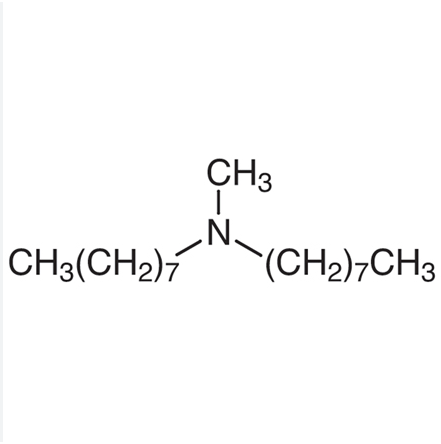
N-Methyldioctylamine CAS Number: 4455-26-9
| Product | N-Methyldioctylamine |
| CAS | 4455-26-9 |
| Formula | C17H37N |
| Synonym | METHYL-DI-N-OCTYLAMINE;DI-N-OCTYLMETHYLAMINE;N,N-DIOCTYLMETHYLAMINE;N,N-DI-N-OCTYL-AMINOMETHANE;N,N-DI-N-OCTYLMETHYLAMINE;N-METHYLDI-N-OCTYLAMINE;N-METHYLDIOCTYLAMINE;Methyldioctylamin |
product description
Basic Info.
Product Description
Appearance: Colorless liquid
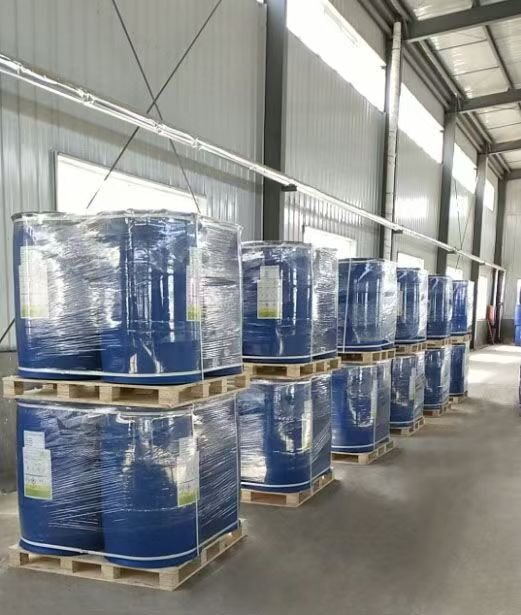
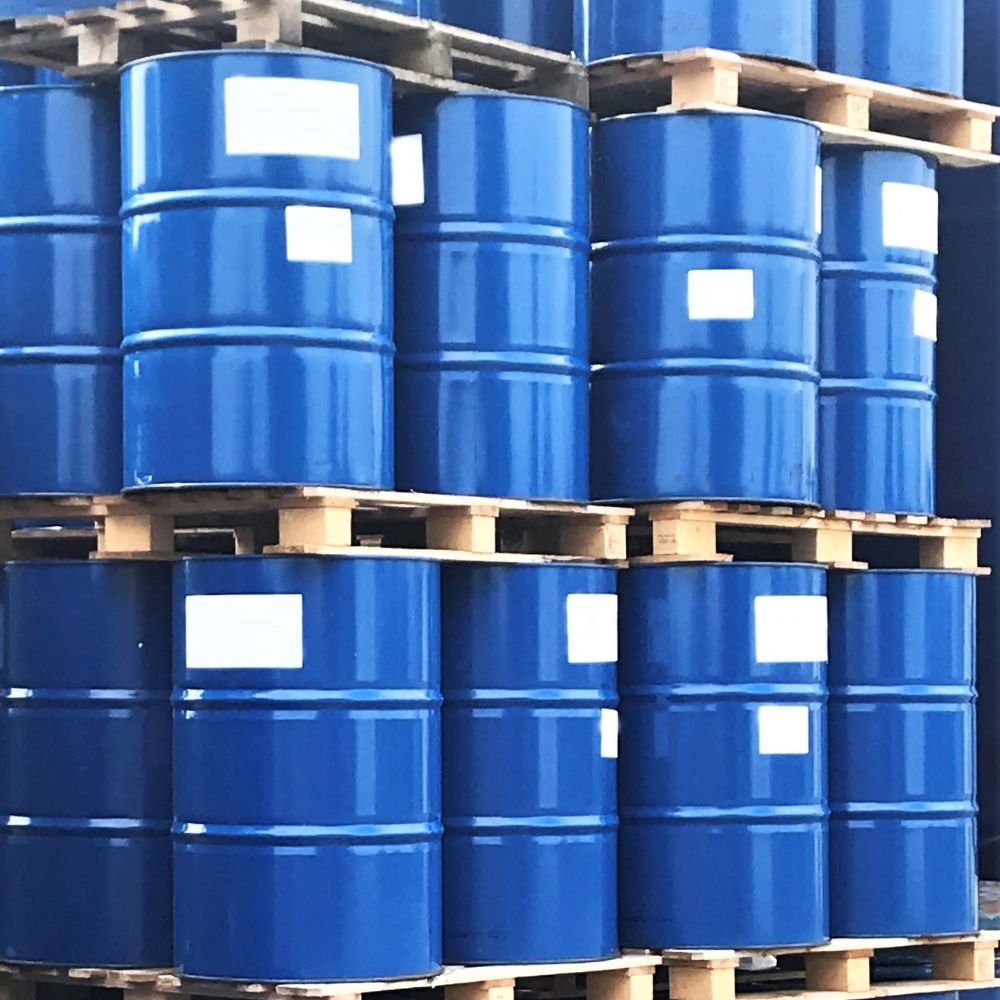
Packing: 25kg/drum or as discussed
Shelf Life: 2 years
Storage: Store in cool and dry area
Certification:ISO GMP KOSHER HALAL
Product Detail
Name: N-Methyldioctylamine
CAS: 4455-26-9
Feature:
N-Methyldioctylamine (N,N,-dioctylmethylamine), a two branched C8 amine is an organic base. N-Methyldioctylamine is a chemical synthesis intermediate material. N-Methyldioctylamine is a tertiary amino compound. The molecular formula of N-Methyldioctylamine is C17H37N. Its molecular weight is 255.48. The melting and boiling points of N-Methyldioctylamine are -30.1 °C and 162-165 °C/15 mmHg, respectively. Contact with it may irritate skin, eyes and mucous membranes. It may be toxic if ingested, inhaled or absorbed through the skin. It is used in the manufacture of other chemicals.
N-Methyldioctylamine is toxic. Inhalation, ingestion or skin contact with material may cause severe injury or death. Contact with molten substance may cause severe burns to skin and eyes. Avoid any skin contact. Effects of contact or inhalation may be delayed. Fire may produce irritating, corrosive and/or toxic gases. Runoff from fire control or dilution water may be corrosive and/or toxic and cause pollution.
N-Methyldioctylamine is combustible material. It may burn but does not readily. When heated, vapors may form explosive mixtures with air: indoors, outdoors and sewers explosion hazards. Contact with metals may evolve flammable. Containers may explode when heated. Runoff may pollute waterways. Substance may be transported in a molten form.
N-Methyldioctylamine has the following applications/functions:
1. N-Methyldioctylamine is an intermediate in synthesizing Bisoctyl Dimethyl Ammonium Chloride (B508880), which is used in the precipitation of silver ions and may be applied to the novel formation if nanoprecipitations using single reverse micellar system.
2. N-Methyldioctylamine is the main raw material for the production of cationic quaternary ammonium salt. It can be reacted to produce double-chain benzyl quaternary ammonium salt D0817. It is used in the disinfectant industry. The fungicide industry is widely used.
3. N-Methyldioctylamine can react with quaternized raw materials such as methyl chloride to produce double-chain quaternary ammonium salt D0821, which is used as a bactericide and softener in oil fields, textiles, Application in daily chemical and other industries.
4. N-Methyldioctylamine can also react with dimethyl sulfate and diethyl sulfate to form Gemini quaternary ammonium salt.
Composition:
Appearance: Colorless liquid
Packing: 25kg/drum or as discussed
Shelf Life: 2 years
Storage: Store in cool and dry area
Certification:ISO GMP KOSHER HALAL
N-Methyldioctylamine Properties
| Melting point | -30.1 °C (lit.) |
|---|---|
| Boiling point | 162-165 °C/15 mmHg (lit.) |
| Density | 0.793 g/mL at 25 °C (lit.) |
| refractive index | n20/D 1.4424(lit.) |
| Flash point | 118°C |
| solubility | Dichloromethane |
| form | Oil |
| pka | 9.97±0.50(Predicted) |
| color | Colorless |
| InChI | 1S/C17H37N/c1-4-6-8-10-12-14-16-18(3)17-15-13-11-9-7-5-2/h4-17H2,1-3H3 |
| InChIKey | YJLYANLCNIKXMG-UHFFFAOYSA-N |
| SMILES | CCCCCCCCN(C)CCCCCCCC |
| CAS DataBase Reference | 4455-26-9(CAS DataBase Reference) |
| EWG’s Food Scores | 1 |
| FDA UNII | HR4264OL41 |
| NIST Chemistry Reference | 1-Octanamine, N-methyl-N-octyl-(4455-26-9) |
| EPA Substance Registry System | N-Methyldioctylamine (4455-26-9) |
| UNSPSC Code | 12352100 |
SAFETY
Risk and Safety Statements
| Symbol(GHS) |   GHS07,GHS09 |
|---|---|
| Signal word | Warning |
| Hazard statements | H315-H319-H335-H400 |
| Precautionary statements | P261-P273-P305+P351+P338 |
| PPE | Eyeshields, Gloves, type ABEK (EN14387) respirator filter |
| Hazard Codes | Xi |
| Risk Statements | 36/37/38 |
| Safety Statements | 26-36-24/25-23 |
| RIDADR | UN 3082 9 / PGIII |
| WGK Germany | 2 |
| TSCA | TSCA listed |
| HazardClass | 8 |
| PackingGroup | III |
| HS Code | 29211980 |
| Storage Class | 10 – Combustible liquids |
| Hazard Classifications | Aquatic Acute 1 Aquatic Chronic 1 Eye Irrit. 2 Skin Irrit. 2 |
| Limited Quantities | 5.0 L (1.3 gallons) (liquid) or 5.0 kg (11 lbs) (solid) |
| Excepted Quantities | Max Inner Pack (30g or 30ml) and Max Outer Pack (1Kg or 1L) |
FAQ
Q1: About the after-sale service of products
A: After purchasing the products from our factory, we have A professional technical team and after-sales team to serve you and solve all your problems in the future.
Q2: Can I get some samples?
A: Yes, we can provide samples, but the customer will pay the freight.
Q3: How do I start paying?
Payment can be made by wire transfer or T/T, apple_pay, google_pay, gc_real_time_bank_transfer , etc.
Q4: How to confirm product quality before placing an order?
A: You can get free samples of some products. You just have to pay the shipping fee or arrange for the sample to be sent to us by express.
You can send us your product specifications and requirements and we will produce products according to your requirements.
Q5: What is your MOQ?
A: The minimum quantity we can order is 1kg.
But usually we can accept a smaller quantity, say 100g, at the cost of 100% sample charge.
Q6: Shipping Time?
A: We ship the parcel out in 1-2 days and offer tracking No.. Shipping time is different to different country. Please consult
| ACF Chemical Co., Ltd. Leon : phone/whatsapp:008615950692266 email:md@acfchemical.com No. 45 Pengwan Road, Qianwan Bonded Port Area, Qingdao Area, China (Shandong) welcome to vist our factory. sample is free ACF Chemical Qingdao Co., Ltd. was established in 1987. the company has over decades of experience in the production of methacrylate and acrylate series products, as well as high-efficiency polymerization inhibitors and rubber and plastic antioxidant series products. The company’s leading products are high-efficiency polymerization inhibitor series products, with an annual production capacity of 1,000 tons of tert-butylhydroquinone (TBC), 800 tons of polymerization inhibitor TH-701, 500 tons of polymerization inhibitor TH-A294, 500 tons of polymerization inhibitor TH-100BE, 500 tons of phenothiazine, and 200 tons of hydroquinone. |
|
| DMEA | 108-01-0 |
| Dodecyl trimethyl ammonium chloride | 112-00-5 |
| N-Hexadecyltrimethylammonium chloride | 112-02-7 |
| 1831 | 112-03-8 |
| 1631Br | 57-09-0 |
| D821 | 5538-94-3 |
| D8/1021 | 68424-95-3 |
| D1021 | 7173-51-5 |
| D1821 | 61789-80-8 |
| TEP88 | 157905-74-3 |
| 1227 C12 | 139-07-1 |
| DMPT(N,N-Dimethyl-p-toluidine) | 99-97-8 |
| NDPT(N,N-dihydroxyethyl-p-toluidine) | 3077-12-1. |
| DMA(N,N-dimethylaniline) | 121-69-7 |
| N,N-Diethylaniline | 91-66-7 |
| MT(M-Toluidine) | 108-44-1 |
| PT(P-Toluidine) | 106-49-0 |
| O-Toluidine OT | 95-53-4 |
| Dimethyl(octyl)amine | 7378-99-6/1120-24-7 |
| C16-18-alkyldimethyl Octadecyl/Hexadecyl dimethylamines | 68390-97-6 |
| Octadecyl/behenyl dimethylamines | 124046-42-0 |
| N,N-dimethyldocosylamine | 21542-96-1 |
| N-Methyldioctylamine | 4455-26-9 |
| Di(octyl/decyl) methylamines | 308062-61-5 |
| Didecyl methylamine | 7396-58-9 |
| N-methyldidodecylamine | 2915-90-4 |
| Dipalmitamine | 16724-61-1 |
| Trioctylamine | 1116-76-3 |
| Trioctylamine | 68814-95-9 |
| N-3-Laurylamidopropyl dimethylamine | 3179-80-4 |
| N-3-(Hydrogenated cocoamido)propyl dimethylamines | 288095-05-6 |
| N-3-Oleylamidopropyl dimethylamine | 109-28-4 |
| N-3-Erucylamidopropyl dimethylamine | 60270-33-9 |
| N-Oleyl 1,3-propanediamine | 7173-62-8 |
| Bis(aminopropyl)laurylamine | 2372-82-9 |
| N-tallow alkyltripropylenetetra | 68911-79-5 |
| 3-(isodecyloxy)propylamine | 30113-45-2 |
| N-[3-(isodecyloxy)propyl]propane-1,3-diamine | 72162-46-0 |
| 2-(Methylamino)ethanol | 109-83-1 |
| N-Methyldiethanolamine | 105-59-9 |
| 3-Methoxy propyl amine | 5332-73-0 |
| N,N-dimethylcyclohexylamine | 98-94-2 |
| 1,3,5-Tris[3-(dimethylamino)propyl]hexahydro-1,3,5-triazine | 15875-13-5 |
| N,N,N’-trimethylamino-N’-ethylethanolamine | 2212-32-0 |
| N,N-Dimethylethanolamine | 108-01-1 |
| Acetone | |
| Acrylic acid | |
| Adipic acid | |
| Alpha-Methylstyrene (AMS) | |
| Benzoic Acid | |
| Bisphenol A | |
| Butyl Acrylat (BA) | |
| Butyl acetate (Butac) | |
| Butyl diglycol (BDG) | |
| Butyl glycol | |
| Para-tertiary butyl benzoic acid (PTBBA) | |
| n-Butanol | |
| n-Butyl methacrylate (n-BUMA) | |
| para-tert. Butylphenol (PTBP) | |


