
product description
Linear Alkyl Benzene Sulphonic Acid, or LABSA for short, has been the world’s largest-volume synthetic surfactant used in the detergent industry for decades. It’s a very cost-effective anionic surfactant with excellent cleaning power and compatibility with other types of surfactants.
LABSA has been the dominant active matter of synthetic detergent powder since it was developed to become a biodegradable replacement for Nonlinear Alkyl Benzene Sulfonate (BAS). It can be stably dried into a powder form, and it can also easily dissolve in water to formulate many kinds of detergents in liquid and gel form, such as Dishwashing Liquid, Laundry Detergent Liquid, and Hand Soap Liquid.
ACF Chemical Co., Ltd. has been partnering with leading LABSA manufacturers through a Third-party Toll-manufacturing Agreement. We can supply top-quality ACF Chemical Co., Ltd. LABSA 96% at a competitive price, with a capacity of 8,000 MT/ Month.
Features & Benefits:
- Excellent solubility and compatibility with other surfactants, resulting in great formulating flexibility.
- The most cost-effective and reachable synthetic surfactant.
- Great foaming, emulsifying, and cleansing ability, also with good biodegradability.
- Outstanding high-temperature stability makes it the perfect surfactant for spray tower-dried synthetic detergent.
Stability/Shelf life:
Stable. Hygroscopic. Incompatible with bases, metals, and oxidizing agents.
Pack in tight-closed containers(drums or tanks); Store in a dry, ventilated and cool place; Kept away from direct sun and water.
Under proper storage conditions, the shelf life o ACF Chemical Co., Ltd. LABSA 96% is 24 months.
Recommended dosage:
The recommended dosage of ACF Chemical Co., Ltd. LABSA 96% in household detergents is 5.0%-25.0%.
Also known as:
- LAS
- LABSA
- Acid Slurry
- Dodecylbenzene Sulfonic Acid (Strait Chain)
- Laurylbenzenesulfonic Acid
- Laurylbenzenesulfonate
- n-Dodecylbenzene Sulfonic Acid
- Alkylbenzene sulfonate, Sodium Salt
- Linear Alkylbenzene Sulphonic Acid
- Sulfonic Acid
Items Standards Product Description
Description of the product1.LinearAlkyl benzene Sulfonate(%):96.min
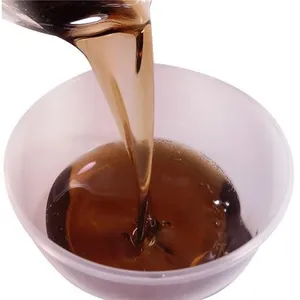
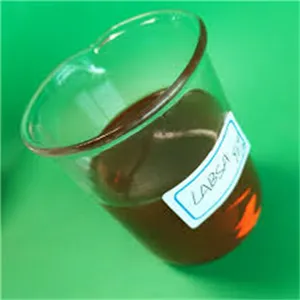
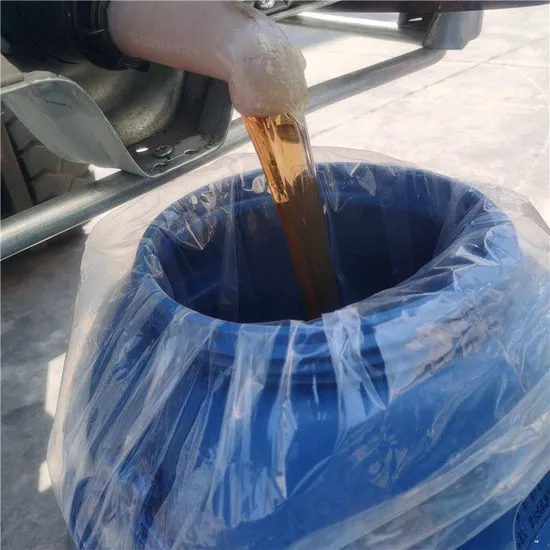
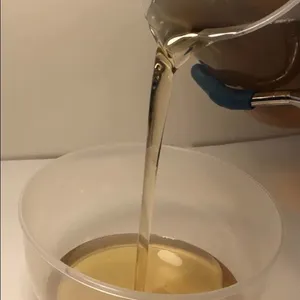
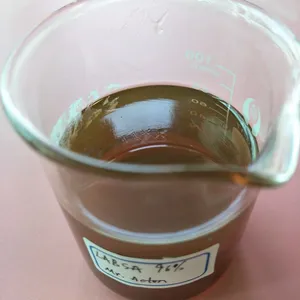
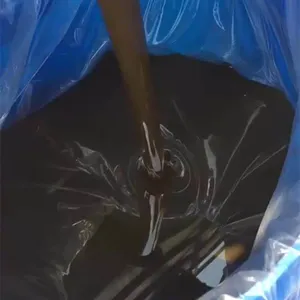
2. Brown viscous liquid
3. free sample is available
4. BV,ISO9001, SGS approval
Product name:Linear Alkyl Benzene Sulfonic Acid / LABSA
Other name:Dodecyl Benzenesulfonic Acid/ DBSA
Appearance: Brown viscous liquid
CAS No.: 27176-87-0
Properity of LABSA
1.Appearance of labsa is brown sticky liquid . Make LABSA 96% for detergent
2.Labsa has the action of detergency, moistening, foaming, emulsion, dispersion and brown
viscous fluid in appearance with acidity.
3.Labsa is non-flammable, quickly dissolved in water, not dissolved in normal organic solvent.
4.Labsa has strong absorbency
5.Labsa would be unclear viscous liquid after absorbed water.
specification of LABSA
Item Specification Measuring Method First class quality Qualified product Alkyl benzene Sulfonate(%) 96.0% 96.0% GB/T 8447 Color Klett 20 Max 40Max Free Oil (%) 1.5Max 1.8Max Sulfuric Acid (%) 1.5 Max 1.5Max Chemical Formula R-C6H4-SO3H Appearance 25°C The viscous liquid with pale yellow and brown CAS No. 27176-87-0 Package &Loading for Linear Alkyl Benzene Sulphonic Acid (LABSA 96%)
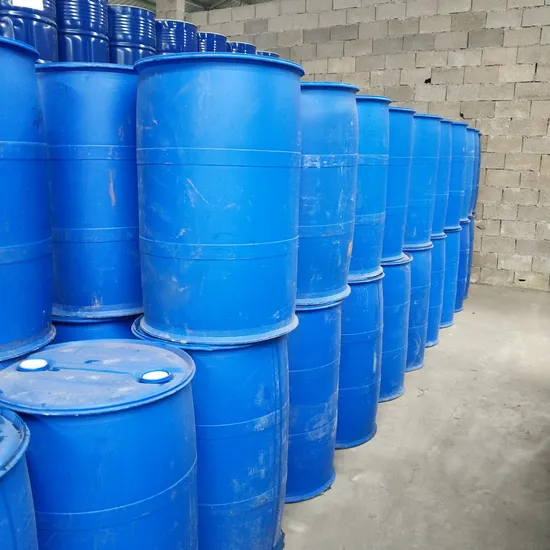
220kg(n.w.) per plastic drum; 17600Kgs(80drums) into 20ft container.
200Kg(n.w.) per plastic drum; 16800Kgs(80drums) into 20ft container.
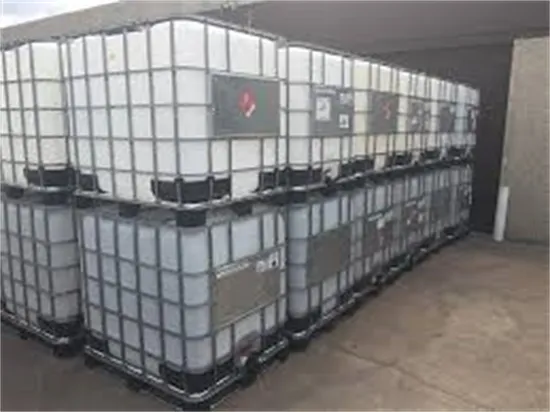
1050Kg(n.w.) per IBC metal base; 21000Kgs(20IBCs) into 20ft container.
22000Kg(n.w.) per ISO tank;application of labsa
1.Labsa in hair shampoo, bath shampoo, dish detergents and complex soap, laundry powder,
dishware cleaner in daily chemical industrial.
2.Labsa in wetting and clearer , dyeing assistant in textile industry.
3.Labsa as degrease agent in electroplate and leather manufacture.
4.Labsa as de-inking agent in paper making.
FAQ
Q1: Are you a manufacturer?
A: Yes, We are the manufacturer invovled in this line for more than 10 years.
Q2: Do you have stock?
A: We understand most customers prefer stock, so we’ll try to keep stock for most products. However, for
some rare products, we won’t keep stock and it needs time to synthesize.
Q3: What certificates and documents do you offer?
A: The following certificate is available, such as COA, MSDS,ISO, SGS Inspection report, BV Assesment,
HALAL, Kosher, CRIA ,Health Certificate ,FDA, FORM A ,FORM E and CIQ certificate etc.
Q4: Why should I choose you?
+10 years experience in chemical industry
Q5: Can I get best price from you?
A: Of course. We don’t chase excessive profits and always try to give best offer. If you are good at bargaining,
you can also enjoy fun of bargaining. Just don’t make it too hard!
Q6: How should I pay?
A: We accept all kinds of payment ways. such as T/T, L/C, West union, Paypal.
Q7: Do you provide free sample?
Yes, we can provide free sample if we have in stock, just need you to cover the delivery cost.
ACF Chemical Co., Ltd.
Athena phone/whatsapp:008613805212761
email:ceo@acfchemical.com
No. 45 Pengwan Road, Qianwan Bonded Port Area, Qingdao Area, China (Shandong)welcome to vist our factory.
sample is free
ACF Chemical Qingdao Co., Ltd. was established in 1987. the company has over decades of experience in the production of methacrylate and acrylate series products, as well as high-efficiency polymerization inhibitors and rubber and plastic antioxidant series products. The company’s leading products are high-efficiency polymerization inhibitor series products, with an annual production capacity of 1,000 tons of tert-butylhydroquinone (TBC), 800 tons of polymerization inhibitor TH-701, 500 tons of polymerization inhibitor TH-A294, 500 tons of polymerization inhibitor TH-100BE, 500 tons of phenothiazine, and 200 tons of hydroquinone.Product CAS: Poly(VinylEthylEther 25104-37-4 Dodecyl methacrylate,LMA 142-90-5、142-84-7 DAIP DIALLYL ISOPHTHALATE 1087-21-4 2-Ethylhexyl nitrate 27247-96-7 Isopropylphenyl phosphate 68937-41-7 2-1sopropylimidazole 36947-68-9 HydrogenatedTallowAmine 61788-45-2 Vinyl 2-Ethylhexanoate 94-04-2 Tolylene-2,4-diisocyanate UNATE T-100 584-84-9 Octyl-3,5-di-tert-butyl-4-hydroxy-hydrocinnamate 125643-61-0 Antioxidant 1010 6683-19-8 Antioxidant 1076 2082-79-3 AT-168 31570-04-4 Nitrilotrimethylenetris(phosphonic acid)ATMP 6419-19-8 DTPMPA [[(phosphonomethyl)imino]bis[ethane-2,1-
diylnitrilobis(methylene)]]tetrakisphosphonic acid15827-60-8 PBTC
2-phosphonobutane-1,2,4-tricarboxylic acid37971-36-1 Hydrolyzed Polymaleic Anhydride(HPMA) 26099-09-2 Methyltetrahydrophthalic andhydride(MTHPA) 11070-44-3 Methylhexahydrophthalic andhydride(MHHPA) 25550-51-0 4-MHHPA Hexahydro-4-methylphthalic anhydride 19438-60-9 Methyl Nadic Anhydride(MNA) 25134-21-8 3,4,5,6-THPA 3,4,5,6-Tetrahydrophthalic anhydride 2426-02-0 Toluenesulfonamide(0/PTSA) 1333-07-9 Diphenyl sulfone(DPS) 127-63-9 Propylenetetramer 6842-15-5 TBPO(tert-Butyl2-ethylhexaneperoxoate) 3006-82-4 LABSA (Linear-Alkylbenzenesulfonic Acid) 27176-87-0 EDA (Ethylenediamine) 107-15-3 Dimethyl carbonate DMC 616-38-6 MMT Methylcyclopentadienyl manganese tricarbonyl 12108-13-3 Linear Alkylbenzene Sulfonic Acid (LABSA) is an anionic surfactant that was primarily introduced in 1964. It has been the world’s largest-volume synthetic surfactant since then. LABSA is widely used in household detergents as well as in numerous industrial applications.
Like other surfactants, LABSA is a bipolar molecule composed of both hydrophilic and hydrophobic parts. Its polar head has a negatively charged sulfonate group, and its hydrophobic part contains an alkylbenzene.
Linear Alkylbenzene Sulfonic Acid is prepared commercially by sulfonating linear alkylbenzene (LAB) and is a more friendly replacement for highly branched alkyl benzene sulphonates (ABS).
Physical and Chemical Properties
The general chemical formula of LABSA is RC6H4SO3H, in which R can be a straight or a branched alkyl chain.
The chemical structure of this molecule depends mainly on the alkyl chain and its position in the molecule. This structure is as follows:
LABSA is a mixture of closely related isomers and homologs. Each containing an aromatic ring sulfonated at the para position and attached to a linear alkyl chain of different lengths (C10 to C13 or C14) .
The molecular formula of our product is C18H30O3S. It consists of a C12 side chain which can form different isomers such as p-(3-Dodecyl) benzene sulphonic acid and 4-Dodecylbenzenesulfonic acid. Our production process leads to the formation of mainly p-(3-Dodecyl) benzene sulphonic acid.
More features of LABSA are listed in the table below:
How is Linear Alkylbenzene Sulfonic Acid manufactured?
Linear Alkyl Benzene Sulfonic Acid (LABSA) belongs to a general organic group called sulfonic acid. The sulfonic acids are among the most important organosulfur compounds with the general formula RSO3H, in which R can be an aliphatic or aromatic organic group.
The first step in producing LABSA is preparing the starting material, LAB (linear alkyl benzene), by Friedel-Crafts Alkylation.
Friedel–Crafts reaction involves the alkylation of an aromatic ring with an alkyl halide using a strong Lewis acid, such as Aluminum Chloride(AlCl3) or Ferric Chloride (FeCl3), as a catalyst. The general mechanism is shown below :
The next step is sulfonation of LAB with a variety of sulfonating agents. Sulphuric acid and Oleum (fuming sulphuric acid) are the predominant agents used for this purpose .
Because the sulfonic acids are frequently used in the form of their sodium salts, sulfonation is usually followed by neutralization with sodium hydroxide or sodium carbonate.
Industry Applications of Linear Alkylbenzene Sulfonic Acid :
Most of LABSA consumption is in household detergency (>80%). Main application products include:
- laundry powders
- laundry liquids
- dishwashing liquids
- liquid soap
- oil soap
- all-purpose cleaners
The remainder of LABSA (<20%) is used in Industrial and Institutional (I&I) cleaners, textile processing (as wetting, dispersing, and cleaning agents), industrial processes (as emulsifiers, and polymerization agents), and in the formulation of agricultural herbicides.
Key Benefits of Linear Alkylbenzene Sulfonic Acid
LABSA is a synthetic surfactant that is widely used due to its relatively low cost and good performance. It is an environmentally friendly substance because of its straight chemical chain that makes it prone to biodegradation. Although some competitive surfactants have advantages of greater hard-water tolerance or better compatibility with enzymes, Linear Alkylbenzene Sulfonic Acid has more favorable properties and is often more affordable .
Fate of LABSA in the environment
Biodegradation is the primary mechanism by which LABSA is transformed in natural environments.
Particular microorganisms mainly conduct the degradation of LABSA. These microorganisms are active under aerobic conditions. They utilize surfactants as substrates for energy and nutrients.
Sulfophenyl carboxylates (SPCs) are the main intermediates of LABSA degradation. SPC toxicities are several orders of magnitude lower than that of the parent material. SPCs then biodegrade to CO2, SO42-, and water under aerobic conditions.
Is Linear Alkylbenzene Sulfonic Acid safe?
As stated above, LABSA is a key ingredient of household detergents. Its abundance results in various consumer contact scenarios, including direct and indirect skin contact, inhalation, and oral ingestion. These contacts can be derived from residues deposited on dishes, accidental product ingestion, or indirectly from drinking water.
Studies have shown that the presence of LABSA in consumer products does not pose any safety concerns associated with systemic toxicity.
Side effects caused by exposure to LABSA
Neat LABSA can be an irritant to the skin and eyes. The higher the concentration, the more irritating this substance will be.
Some common side effects of exposure to LABSA are listed below:
LABSA in household products. is it safe?
The irritation potential of aqueous solutions of Linear Alkylbenzene Sulfonic Acid depends on the concentration.
Linear Alkylbenzene Sulfonic Acid is chiefly used to manufacture washing powder, detergent powder, hand wash solutions, and cleaning powder. The concentration of this substance is relatively low in these products. Therefore, the risk of irritation is mostly negligible.
Skin irritation
Even though various hygiene products such as hand wash and laundry wash contain different concentrations of LABSA, there is no report of noticeable skin irritation.
- Hand wash
Skin contact to hand wash solutions containing LABSA is not a cause of concern because its concentration in such solutions is below 1%. Animal studies well confirm this data. Aqueous solutions of Linear Alkylbenzene Sulfonic Acid at concentrations up to 2.5% didn’t show any irritation effects on rabbit skin after 24 hours of occlusive application.
- Laundry wash
Laundry powders and laundry liquids contain a higher concentration of LABSA (in the worst case containing up to 14%). Contact to these products is confined to a fraction of the skin of the hands (palms or fingers) and may result in transient skin irritation, which is expected to be mild and effectively avoided by prompt washing with water.
Carcinogenicity
Numerous studies have been performed to evaluate the ability of LABSA in tumor induction. These investigations were mainly done on animal models, including rats.
In the most documented study, varying concentrations of LABSA were administered to the rats for two years. The results of this study were consistent with other experiments and showed no evidence of carcinogenicity .
Wrap up
Linear Alkylbenzene Sulfonic Acid (LABSA) is an anionic synthetic surfactant that has been widely used since its introduction. It is a safer replacement to the highly branched Alkylbenzene Sulfonates that tend to stay in the environment longer.
Linear Alkylbenzene Sulfonic Acid is actually the first surfactant to be introduced to improve the problems caused by the industry.
The main application of LABSA is in household detergents. It is also used for industrial purposes and herbicide formulations.
Exposure to LABSA may irritate the skin and eyes but is not a cause for concern due to its low concentration in various available formulations. Its safety has also been confirmed by different animal studies.


