
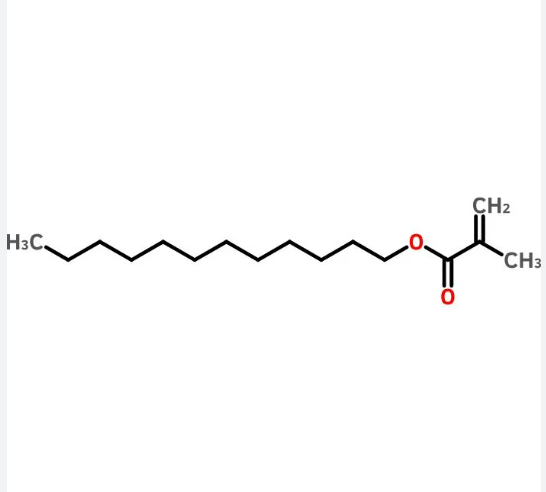
Dodecyl Methacrylate CAS Number: 142-90-5
| Product | Dodecyl Methacrylate |
| CAS | 142-90-5 |
| MF | C16H30O2 |
| Formula | DODECYLMETHACRYLATE;DODECYL2-METHYL-2-PROPENOATE;DODECYL2-METHYLPROPENOATE;LAURYLMETHACRYLATE;METHACRChemicalbookYLICACIDDODECYLESTER;
METHACRYLICACIDN-DODECYLESTER;METHACRYLICACIDLAURYLESTER;1-Dodecanolmethacrylate |
product description
Basic Info.
Dodecyl Methacrylate Chemical Properties
| Melting point | -7 °C (lit.) |
| Boiling point | 142 °C/4 mmHg (lit.) |
| density | 0.868 g/mL at 25 °C (lit.) |
| vapor pressure | 0.06Pa at 20℃ |
| refractive index | n20/D 1.445(lit.) |
| Fp | >230 °F |
| storage temp. | Inert atmosphere,2-8°C |
| solubility | Chloroform (Slightly), Methanol (Slightly) |
| form | Liquid |
| color | Clear light yellow |
| Water Solubility | insoluble |
| BRN | 1708160 |
| Cosmetics Ingredients Functions | VISCOSITY CONTROLLING |
| Cosmetic Ingredient Review (CIR) | Dodecyl Methacrylate (142-90-5) |
| InChI | 1S/C16H30O2/c1-4-5-6-7-8-9-10-11-12-13-14-18-16(17)15(2)3/h2,4-14H2,1,3H3 |
| InChIKey | GMSCBRSQMRDRCD-UHFFFAOYSA-N |
| SMILES | CCCCCCCCCCCCOC(=O)C(C)=C |
| LogP | 6.68 at 20℃ |
| CAS DataBase Reference | 142-90-5(CAS DataBase Reference) |
| NIST Chemistry Reference | 2-Propenoic acid, 2-methyl-, dodecyl ester(142-90-5) |
| EPA Substance Registry System | Lauryl methacrylate (142-90-5) |
| Safety Information |
| Hazard Codes | Xi,N |
| Risk Statements | 36/37/38-50/53 |
| Safety Statements | 26-28-60-61-28B |
| RIDADR | UN 3082 9/PG 3 |
| WGK Germany | 2 |
| RTECS | OZ4300000 |
| TSCA | TSCA listed |
| HazardClass | 9 |
| PackingGroup | III |
| HS Code | 29161490 |
| Storage Class | 10 – Combustible liquids |
| Hazard Classifications | Aquatic Acute 1 Aquatic Chronic 1 Eye Irrit. 2 Skin Irrit. 2 STOT SE 3 |
| Hazardous Substances Data | 142-90-5(Hazardous Substances Data) |
| MSDS Information |
| Provider | Language |
|---|---|
| Dodecyl 2-methylacrylate | English |
| ACROS | English |
| SigmaAldrich | English |
| Dodecyl Methacrylate Usage And Synthesis |
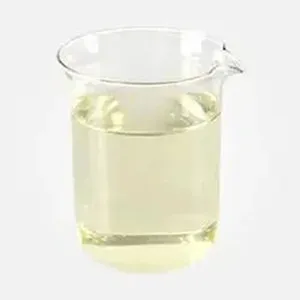
| Chemical Properties | clear colorless to yellowish liquid |
| Uses | Miniemulsion polymerization of laurel methacrylate has been reported. Atom transfer radical polymerization and consecutive block copolymerization with methyl methacrylate has been investigated. Preparation of LMA based monolithic columns for CEC has been reported. LMA is used as a co-stabilizer to retard Ostwald ripening effect. |
| Application | Dodecyl methacrylate (Dodecyl 2-methylacrylate; Lauryl methacrylate) could be a crosslinker in preparing tough polyacrylamide hydrogels. It can also be used in the following industries: In the adhesive industry, it is used for Synthetic sealants, adhesive glue agents; In the coatings industry, it is used for renewing resin/coating, coating material at low temperatures for cars; In the oil industry, it is used as a synthetic oil-soluble drag-reduction agent; In the rubber industry, it is used as a composite stabilizer; In the oil lubricant industry, it can be used as lubricating oil; In the papermaking industry, it is used as a composite stabilizer; In fiber processing industries, it is used for composite spinning oil, synthetic high waterproof, and oil-proof fabric finishing agents; In the plastic industry, it is used for the synthesis of monomers. |
| Production Methods | Putting the main ingredients of dodecanol and methacrylic acid into an esterification reaction vessel, adding a solvent (toluene or xylene), adding a catalyst (phosphoric acid or p-toluenesulfonic acid), adding an inhibitor A (copper chloride), stirring the reaction, and obtaining a reaction material. The esterification reaction vessel is evacuated, the pressure in the esterification reaction vessel is controlled to be -0.04~-0.08Mpa, the temperature in the esterification reaction vessel is increased until reflux liquid flows out, and the temperature is kept until no reflux liquid flows out or until the acid value in the reaction solution is detected to be 30~50mgKOH/g. Then the temperature is lowered to room temperature. The reaction material is transferred to a water washing container, an alkali solution is added, the pH value of the reaction material is controlled to be 7~8, and the reaction material is allowed to stand. After the reaction material is layered, the wastewater in the lower layer is discharged. The reaction material without wastewater is transferred to a distillation container, the inhibitor B (2-tert-butyl-4-methylphenol) is added, the distillation container is evacuated, and toluene is removed by distillation to obtain the product. |
| General Description | Liquid. Floats on water. |
| Reactivity Profile | Dodecyl 2-methylacrylate is an ester. Esters react with acids to liberate heat along with alcohols and acids. Strong oxidizing acids may cause a vigorous reaction that is sufficiently exothermic to ignite the reaction products. Heat is also generated by the interaction of esters with caustic solutions. Flammable hydrogen is generated by mixing esters with alkali metals and hydrides. Tends to polymerize. Oxidizing and reducing agents may initiate polymerization. Reaction may also occur when heated [USCG, 1999]. |
| Health Hazard | Inhalation temporarily reduces blood pressure from 5 to 25%, increases respiratory rate, decreases heart rate, and causes some EKG changes. Liquid may cause irritation of eyes and skin. May be harmful if swallowed. |
| Fire Hazard | Behavior in Fire: Heat can induce polymerization with rapid release of energy. Sealed containers may rupture explosively. |
| Flammability and Explosibility | Non flammable |
| Purification Methods | Purify the ester by fractional distillation in a high vacuum. Add 0.05% of hydroquinone monomethyl ether as stabilizer. [Rehberg & Fischer Ind Eng Chem 40 1430 1948, Beilstein 2 III 1290, 2 IV 1528.] |
FAQ
Q1: About the after-sale service of products
A: After purchasing the products from our factory, we have A professional technical team and after-sales team to serve you and solve all your problems in the future.
Q2: Can I get some samples?
A: Yes, we can provide samples, but the customer will pay the freight.
Q3: How do I start paying?
Payment can be made by wire transfer or T/T, apple_pay, google_pay, gc_real_time_bank_transfer , etc.
Q4: How to confirm product quality before placing an order?
A: You can get free samples of some products. You just have to pay the shipping fee or arrange for the sample to be sent to us by express.
You can send us your product specifications and requirements and we will produce products according to your requirements.
Q5: What is your MOQ?
A: The minimum quantity we can order is 1kg.
But usually we can accept a smaller quantity, say 100g, at the cost of 100% sample charge.
Q6: Shipping Time?
A: We ship the parcel out in 1-2 days and offer tracking No.. Shipping time is different to different country. Please consult
| ACF Chemical Co., Ltd.
Leon phone/whatsapp:008615950692266 email:md@acfchemical.com No. 45 Pengwan Road, Qianwan Bonded Port Area, Qingdao Area, China (Shandong) |
|
| DMEA | 108-01-0 |
| Dodecyl trimethyl ammonium chloride | 112-00-5 |
| N-Hexadecyltrimethylammonium chloride | 112-02-7 |
| 1831 | 112-03-8 |
| 1631Br | 57-09-0 |
| D821 | 5538-94-3 |
| D8/1021 | 68424-95-3 |
| D1021 | 7173-51-5 |
| D1821 | 61789-80-8 |
| TEP88 | 157905-74-3 |
| 1227 C12 | 139-07-1 |
| DMPT(N,N-Dimethyl-p-toluidine) | 99-97-8 |
| NDPT(N,N-dihydroxyethyl-p-toluidine) | 3077-12-1. |
| DMA(N,N-dimethylaniline) | 121-69-7 |
| N,N-Diethylaniline | 91-66-7 |
| MT(M-Toluidine) | 108-44-1 |
| PT(P-Toluidine) | 106-49-0 |
| O-Toluidine OT | 95-53-4 |
| Dimethyl(octyl)amine | 7378-99-6/1120-24-7 |
| C16-18-alkyldimethyl Octadecyl/Hexadecyl dimethylamines | 68390-97-6 |
| Octadecyl/behenyl dimethylamines | 124046-42-0 |
| N,N-dimethyldocosylamine | 21542-96-1 |
| N-Methyldioctylamine | 4455-26-9 |
| Di(octyl/decyl) methylamines | 308062-61-5 |
| Didecyl methylamine | 7396-58-9 |
| N-methyldidodecylamine | 2915-90-4 |
| Dipalmitamine | 16724-61-1 |
| Trioctylamine | 1116-76-3 |
| Trioctylamine | 68814-95-9 |
| N-3-Laurylamidopropyl dimethylamine | 3179-80-4 |
| N-3-(Hydrogenated cocoamido)propyl dimethylamines | 288095-05-6 |
| N-3-Oleylamidopropyl dimethylamine | 109-28-4 |
| N-3-Erucylamidopropyl dimethylamine | 60270-33-9 |
| N-Oleyl 1,3-propanediamine | 7173-62-8 |
| Bis(aminopropyl)laurylamine | 2372-82-9 |
| N-tallow alkyltripropylenetetra | 68911-79-5 |
| 3-(isodecyloxy)propylamine | 30113-45-2 |
| N-[3-(isodecyloxy)propyl]propane-1,3-diamine | 72162-46-0 |
| 2-(Methylamino)ethanol | 109-83-1 |
| N-Methyldiethanolamine | 105-59-9 |
| 3-Methoxy propyl amine | 5332-73-0 |
| N,N-dimethylcyclohexylamine | 98-94-2 |
| 1,3,5-Tris[3-(dimethylamino)propyl]hexahydro-1,3,5-triazine | 15875-13-5 |
| N,N,N’-trimethylamino-N’-ethylethanolamine | 2212-32-0 |
| N,N-Dimethylethanolamine | 108-01-1 |
| Acetone | |
| Acrylic acid | |
| Adipic acid | |
| Alpha-Methylstyrene (AMS) | |
| Benzoic Acid | |
| Bisphenol A | |
| Butyl Acrylat (BA) | |
| Butyl acetate (Butac) | |
| Butyl diglycol (BDG) | |
| Butyl glycol | |
| Para-tertiary butyl benzoic acid (PTBBA) | |
| n-Butanol | |
| n-Butyl methacrylate (n-BUMA) | |
| para-tert. Butylphenol (PTBP) | |


