
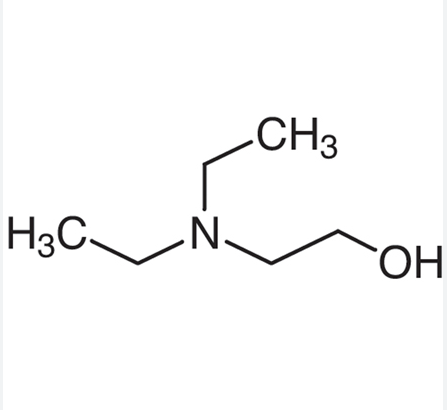
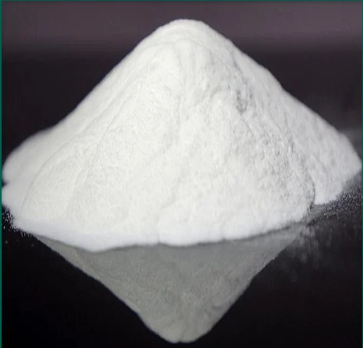
Diethylaminoethanol CAS Number: 100-37-8
| Product | Diethylaminoethanol |
| CAS | 100-37-8 |
| MF | C6H15NO |
| Formula | β-Diethylaminoethylalcohol;2-DIETHYLAMINOETHANOL,REAGENT;Dietyleneglycol;1,2-DIETHYLAMINOETHANOL;2-DIETHYChemicalbookLAMINOETHANE;Diethylethanolamin;2-(DIETHYLAMINO)-ETHANOL99+%;
2-diethylaminoethanolN,N-diethylethanolamine |
product description
Basic Information
2-Diethylaminoethanol
N,N-Diethylethanolamine
Diethylaminoethanol
2-(Diethylamino)ethanol
2-Hydroxytriethylamine Diethyl
–
2-hydroxyethylamine 2
-Hydroxytriethylamine Diethylethanolamine Diethylaminoethanol
N
,N-Diethylethanolamine/2-Diethylaminoethanol 2-
Diethylaminoethanol
Diethylethanol
2-DIETHYLAMINOETHANOL
(2-HYDROXYETHYL)DIETHYLAMINE
DIETHYLAMINOETHANOL
DIETHYLAMINOETHANOLAMINE
DIETHYLAMLNOETHANOL
DIETHYLETHANOLAMINE
DIETHYLETHANOLAMINE(N,N-)
N,N-DIETHYLETHANOLAMINE
2-(Diethylamino)ethyl alcohol
2-(N,N-Diethylamino)ethanol
2-Hydroxytriethylamine
beta-(Diethylamino)ethanol
beta-(Diethylamino)ethyl alcohol
beta-Hydroxytriethylamine
DEAE
Dehydasal
Diaethylaminoaethanol
Diethyl(2-hydroxyethyl)amine
-Diethylamino
Loramine AMB 13
Biochemical Engineering: Amino Alcohol Derivatives
Physicochemical properties
Security Data


Acute Tox. 3 Inhalation
Acute Tox. 4 Oral
Flam. Liq. 3
Skin Corr. 1B
Application areas
Used as a pharmaceutical intermediate, softener, emulsifier, curing agent, etc.
Used in organic synthesis and pharmaceutical industries, and also as an emulsifier for acidic media.
This product is a pharmaceutical intermediate. It is used in the production of procaine hydrochloride, dextromethorphan, methimazole, metoclopramide, and acetaminophen. It is also used as a solvent to remove acidic gases, such as hydrogen sulfide and carbon dioxide, from natural gas and refinery gas. Furthermore, it can be used to produce fatty acid derivatives, fiber softeners, rust inhibitors, emulsifiers, and vulcanization catalysts and components for polyurethane foams.
It is mainly used in pharmaceutical intermediates, organic synthesis, and the removal of acidic gases from natural gas.
Preparation method
Chloroethanol is reacted with sodium hydroxide at 105°C to produce ethylene oxide, which is then passed into a diethylamine solution for further reaction. After separating low-boiling fractions under normal pressure, N,N-diethylethanolamine is obtained by vacuum distillation. Currently, most manufacturers directly use ethylene oxide as a raw material.
Upstream and downstream product information
Naphthylfuran oxalate hydrochloride, octopaine, naphthylfuran oxalate, phenolsulfonamide, 2 -diethylaminochloroethane hydrochloride , 691 polyurethane adhesive , procaine, diethylaminoethyl methacrylate, caramelfen, 2-(2-diethylaminoethoxy)ethanol , proadifen , otilium bromide, 2-diethylamino-1-bromoethane hydrobromide, N,N-diethylaminoethyl acrylate, 2-diethylaminoethylthiol
FAQ
Q1: About the after-sale service of products
A: After purchasing the products from our factory, we have A professional technical team and after-sales team to serve you and solve all your problems in the future.
Q2: Can I get some samples?
A: Yes, we can provide samples, but the customer will pay the freight.
Q3: How do I start paying?
Payment can be made by wire transfer or T/T, apple_pay, google_pay, gc_real_time_bank_transfer , etc.
Q4: How to confirm product quality before placing an order?
A: You can get free samples of some products. You just have to pay the shipping fee or arrange for the sample to be sent to us by express.
You can send us your product specifications and requirements and we will produce products according to your requirements.
Q5: What is your MOQ?
A: The minimum quantity we can order is 1kg.
But usually we can accept a smaller quantity, say 100g, at the cost of 100% sample charge.
Q6: Shipping Time?
A: We ship the parcel out in 1-2 days and offer tracking No.. Shipping time is different to different country. Please consult
| ACF Chemical Co., Ltd.
Leon phone/whatsapp:008615950692266 email:md@acfchemical.com No. 45 Pengwan Road, Qianwan Bonded Port Area, Qingdao Area, China (Shandong) |
|
| DMEA | 108-01-0 |
| Dodecyl trimethyl ammonium chloride | 112-00-5 |
| N-Hexadecyltrimethylammonium chloride | 112-02-7 |
| 1831 | 112-03-8 |
| 1631Br | 57-09-0 |
| D821 | 5538-94-3 |
| D8/1021 | 68424-95-3 |
| D1021 | 7173-51-5 |
| D1821 | 61789-80-8 |
| TEP88 | 157905-74-3 |
| 1227 C12 | 139-07-1 |
| DMPT(N,N-Dimethyl-p-toluidine) | 99-97-8 |
| NDPT(N,N-dihydroxyethyl-p-toluidine) | 3077-12-1. |
| DMA(N,N-dimethylaniline) | 121-69-7 |
| N,N-Diethylaniline | 91-66-7 |
| MT(M-Toluidine) | 108-44-1 |
| PT(P-Toluidine) | 106-49-0 |
| O-Toluidine OT | 95-53-4 |
| Dimethyl(octyl)amine | 7378-99-6/1120-24-7 |
| C16-18-alkyldimethyl Octadecyl/Hexadecyl dimethylamines | 68390-97-6 |
| Octadecyl/behenyl dimethylamines | 124046-42-0 |
| N,N-dimethyldocosylamine | 21542-96-1 |
| N-Methyldioctylamine | 4455-26-9 |
| Di(octyl/decyl) methylamines | 308062-61-5 |
| Didecyl methylamine | 7396-58-9 |
| N-methyldidodecylamine | 2915-90-4 |
| Dipalmitamine | 16724-61-1 |
| Trioctylamine | 1116-76-3 |
| Trioctylamine | 68814-95-9 |
| N-3-Laurylamidopropyl dimethylamine | 3179-80-4 |
| N-3-(Hydrogenated cocoamido)propyl dimethylamines | 288095-05-6 |
| N-3-Oleylamidopropyl dimethylamine | 109-28-4 |
| N-3-Erucylamidopropyl dimethylamine | 60270-33-9 |
| N-Oleyl 1,3-propanediamine | 7173-62-8 |
| Bis(aminopropyl)laurylamine | 2372-82-9 |
| N-tallow alkyltripropylenetetra | 68911-79-5 |
| 3-(isodecyloxy)propylamine | 30113-45-2 |
| N-[3-(isodecyloxy)propyl]propane-1,3-diamine | 72162-46-0 |
| 2-(Methylamino)ethanol | 109-83-1 |
| N-Methyldiethanolamine | 105-59-9 |
| 3-Methoxy propyl amine | 5332-73-0 |
| N,N-dimethylcyclohexylamine | 98-94-2 |
| 1,3,5-Tris[3-(dimethylamino)propyl]hexahydro-1,3,5-triazine | 15875-13-5 |
| N,N,N’-trimethylamino-N’-ethylethanolamine | 2212-32-0 |
| N,N-Dimethylethanolamine | 108-01-1 |
| Acetone | |
| Acrylic acid | |
| Adipic acid | |
| Alpha-Methylstyrene (AMS) | |
| Benzoic Acid | |
| Bisphenol A | |
| Butyl Acrylat (BA) | |
| Butyl acetate (Butac) | |
| Butyl diglycol (BDG) | |
| Butyl glycol | |
| Para-tertiary butyl benzoic acid (PTBBA) | |
| n-Butanol | |
| n-Butyl methacrylate (n-BUMA) | |
| para-tert. Butylphenol (PTBP) | |


