
product description
Basic Info.
1-OCTENE Properties
| Melting point | -101 °C (lit.) |
|---|---|
| Boiling point | 122-123 °C (lit.) |
| Density | 0.715 g/mL at 25 °C (lit.) |
| vapor density | 3.9 (vs air) |
| vapor pressure | 36 mm Hg ( 38 °C) |
| refractive index | n20/D 1.408(lit.) |
| FEMA | 4293 | 1-OCTENE |
| Flash point | 70 °F |
| storage temp. | Store below +30°C. |
| solubility | Soluble in acetone, benzene, and chloroform (Weast, 1986). Miscible with alcohol, ether (Windholz et al., 1983), and many aliphatic hydrocarbons. |
| form | Liquid |
| pka | >14 (Schwarzenbach et al., 1993) |
| color | Clear |
| Specific Gravity | 0.714 |
| Odor | gasoline |
| Odor Threshold | 0.001ppm |
| biological source | synthetic |
| Viscosity | 0.66mm2/s |
| explosive limit | 0.7-6.8%(V) |
| Water Solubility | Miscible with water, ether, alcohol and acetone. |
| Merck | 14,1764 |
| JECFA Number | 2191 |
| BRN | 1734497 |
| Henry’s Law Constant | 0.952 at 25 °C (Hine and Mookerjee, 1975) |
| Dielectric constant | 2.1(20℃) |
| Stability | Stable. Highly flammable. Incompatible with strong oxidizing agents, acids. |
| Major Application | cleaning products cosmetics environmental flavors and fragrances food and beverages personal care petroleum |
| Cosmetics Ingredients Functions | SOLVENT |
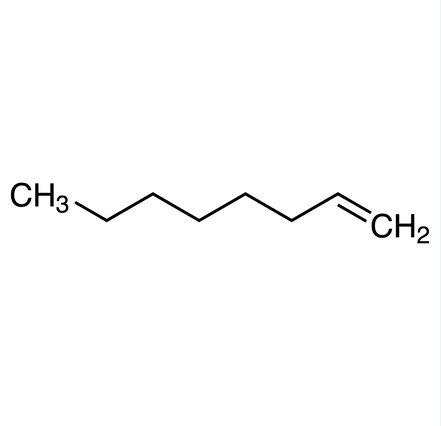
| InChI | 1S/C8H16/c1-3-5-7-8-6-4-2/h3H,1,4-8H2,2H3 |
| InChIKey | KWKAKUADMBZCLK-UHFFFAOYSA-N |
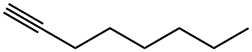
| SMILES | CCCCCCC=C |
| LogP | 4.47 at 20℃ |
| CAS DataBase Reference | 111-66-0(CAS DataBase Reference) |
| Substances Added to Food (formerly EAFUS) | 1-OCTENE |
| FDA UNII | E5VK21B9RC |
| EPA Substance Registry System | 1-Octene (111-66-0) |
| UNSPSC Code | 41116107 |
| NACRES | NA.24 |
SAFETY
Risk and Safety Statements
| Symbol(GHS) |    GHS02,GHS08,GHS09 |
|---|---|
| Signal word | Danger |
| Hazard statements | H225-H304-H410 |
| Precautionary statements | P210-P233-P240-P273-P301+P310-P331 |
| PPE | Eyeshields, Faceshields, Gloves, type ABEK (EN14387) respirator filter |
| Hazard Codes | F,Xn,N |
| Risk Statements | 11-51/53-65-10-66-50/53-38 |
| Safety Statements | 16-60-62-61 |
| RIDADR | UN 3295 3/PG 2 |
| WGK Germany | 1 |
| RTECS | RH2207000 |
| Autoignition Temperature | 446 °F |
| TSCA | TSCA listed |
| HazardClass | 3 |
| PackingGroup | II |
| HS Code | 29012990 |
| Storage Class | 3 – Flammable liquids |
| Hazard Classifications | Aquatic Acute 1 Aquatic Chronic 1 Asp. Tox. 1 Flam. Liq. 2 |
| Hazardous Substances Data | 111-66-0(Hazardous Substances Data) |
| Toxicity | LD50 orally in Rabbit: > 5000 mg/kg LD50 dermal Rabbit > 2000 mg/kg |
| Limited Quantities | 1.0 L (0.3 gallon) (liquid) |
| Excepted Quantities | Max Inner Pack (30g or 30ml) and Max Outer Pack (500g or 500ml) |
1-OCTENE Chemical Properties,Uses,Production
Chemical Properties
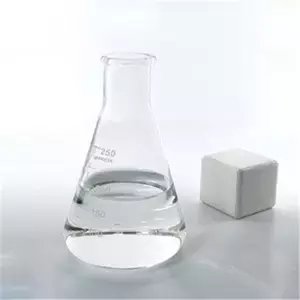
colourless liquid
Chemical Properties
Colorless, clear liquid; gasoline aroma.
Physical properties
Clear, colorless, flammable liquid with a mild but unpleasant hydrocarbon odor. Based on a triangle bag odor method, an odor threshold concentration of 1.0 ppbv was reported by Nagata and Takeuchi (1990).
Uses
Plasticizer; surfactants. Used as a comonomer in the production of high density polyethylene and linear low density polyethylene. Starting material for synthesis of a variety of compounds including nananoic acid.
Uses
1-Octene acts as a comonomer used in the preparation of polyethylene, especially high-density polyethylene (HDPE) and linear low-density polyethylene(LLDPE) resins. It is also used in organic synthesis, surfactants and plasticizers. Further, it is used in process regulators and viscosity adjustors. In addition to this, it is used in the preparation of linear aldehyde through the oxo synthesis (hydroformylation) to get the nonanal.
Uses
1-Octene is a linear α-olefin mainly used as a comonomer in the synthesis of linear low-density polyethylene (LLDPE). Extensive work has been reported on the hydroformylation of 1-octene using various catalysts. It is also an important source to synthesize important petrochemical building blocks via epoxidation reaction.
Production Methods
Production method: 1) from Allyl chloride and n-Amyl magnesium bromide. 2) from Octanol with Iodine and red phosphorus. 3) from Monosodium acetylene with Octyl iodide in liquid Ammonia at 40” C. under pressure.
Definition
ChEBI: An octene with an unsaturation C-1.
Aroma threshold values
High strength odor; recommend smelling in a 1.00% solution or less.
Synthesis Reference(s)
Journal of the American Chemical Society, 93, p. 1487, 1971 DOI: 10.1021/ja00735a030
Tetrahedron Letters, 25, p. 1283, 1984 DOI: 10.1016/S0040-4039(01)80135-0
General Description
A colorless liquid. Flash point 70°F. Insoluble in water and less dense (at about 6 lb / gal) than water. Hence floats on water. Vapors are heavier than air and may settle in depressions. Reported to biodegrade very slowly. Used in organic synthesis, surfactants, and plasticizers.
Air & Water Reactions
Highly flammable. Insoluble in water.
Reactivity Profile
1-OCTENE may react vigorously with strong oxidizing agents. May react exothermically with reducing agents to release hydrogen gas. In the presence of various catalysts (such as acids) or initiators, may undergo exothermic addition polymerization reactions.
Health Hazard
Generally low toxicity. Mildly anesthetic at high vapor concentrations. May irritate eyes.
Source
Identified as one of 140 volatile constituents in used soybean oils collected from a processing plant that fried various beef, chicken, and veal products (Takeoka et al., 1996).
Environmental Fate
Biological. Biooxidation of 1-octene may occur yielding 7-octen-1-ol, which may oxidize to 7- octenoic acid (Dugan, 1972).
Photolytic. Atkinson and Carter (1984) reported a rate constant of 8.1 x 10⁻¹⁸ cm3/molecule?sec for the reaction of 1-octene and OH radicals in the atmosphere.
Chemical/Physical. The reaction of ozone and OH radicals with 1-octene was studied in a flexible outdoor Teflon chamber (Paulson and Seinfeld, 1992). 1-Octene reacted with ozone producing heptanal, a thermally stabilized C7 biradical, and hexane at yields of 80, 10, and 1%, respectively. With OH radicals, only 15% of 1-octene was converted to heptanal. In both reactions, the remaining compounds were tentatively identified as alkyl nitrates (Paulson and Seinfeld, 1977). Grosjean et al. (1996) investigated the atmospheric chemistry of 1-octene with ozone and an ozone-nitrogen oxide mixture under ambient conditions. The reaction of 1-octene and ozone in the dark yielded formaldehyde, hexanal, heptanal, cyclohexanone, and a compound tentatively identified as 2-oxoheptanal. The sunlight irradiation of 1-octene with ozone-nitrogen oxide yielded the following carbonyls: formaldehyde, acetaldehyde, propanal, 2-butanone, butanal, pentanal, glyoxal, hexanal, heptanal, and pentanal.
Chemical/Physical. Complete combustion in air yields carbon dioxide and water.
Purification Methods
Distil 1-octene under nitrogen from sodium which removes water and peroxides. Peroxides can also be removed by percolation through dried, acid washed, alumina. Store it under N2, or Ar in the dark. [Strukul & Michelin J Am Chem Soc 107 7563 1985, Beilstein 1 H 221, 1 II 199, 1 IV 874.]

1-OCTENE Preparation Products And Raw materials
FAQ
Q1: About the after-sale service of products
A: After purchasing the products from our factory, we have A professional technical team and after-sales team to serve you and solve all your problems in the future.
Q2: Can I get some samples?
A: Yes, we can provide samples, but the customer will pay the freight.
Q3: How do I start paying?
Payment can be made by wire transfer or T/T, apple_pay, google_pay, gc_real_time_bank_transfer , etc.
Q4: How to confirm product quality before placing an order?
A: You can get free samples of some products. You just have to pay the shipping fee or arrange for the sample to be sent to us by express.
You can send us your product specifications and requirements and we will produce products according to your requirements.
Q5: What is your MOQ?
A: The minimum quantity we can order is 1kg.
But usually we can accept a smaller quantity, say 100g, at the cost of 100% sample charge.
Q6: Shipping Time?
A: We ship the parcel out in 1-2 days and offer tracking No.. Shipping time is different to different country. Please consult
| ACF Chemical Co., Ltd.
Leon phone/whatsapp:008615950692266 email:md@acfchemical.com No. 45 Pengwan Road, Qianwan Bonded Port Area, Qingdao Area, China (Shandong) |
|
| DMEA | 108-01-0 |
| Dodecyl trimethyl ammonium chloride | 112-00-5 |
| N-Hexadecyltrimethylammonium chloride | 112-02-7 |
| 1831 | 112-03-8 |
| 1631Br | 57-09-0 |
| D821 | 5538-94-3 |
| D8/1021 | 68424-95-3 |
| D1021 | 7173-51-5 |
| D1821 | 61789-80-8 |
| TEP88 | 157905-74-3 |
| 1227 C12 | 139-07-1 |
| DMPT(N,N-Dimethyl-p-toluidine) | 99-97-8 |
| NDPT(N,N-dihydroxyethyl-p-toluidine) | 3077-12-1. |
| DMA(N,N-dimethylaniline) | 121-69-7 |
| N,N-Diethylaniline | 91-66-7 |
| MT(M-Toluidine) | 108-44-1 |
| PT(P-Toluidine) | 106-49-0 |
| O-Toluidine OT | 95-53-4 |
| Dimethyl(octyl)amine | 7378-99-6/1120-24-7 |
| C16-18-alkyldimethyl Octadecyl/Hexadecyl dimethylamines | 68390-97-6 |
| Octadecyl/behenyl dimethylamines | 124046-42-0 |
| N,N-dimethyldocosylamine | 21542-96-1 |
| N-Methyldioctylamine | 4455-26-9 |
| Di(octyl/decyl) methylamines | 308062-61-5 |
| Didecyl methylamine | 7396-58-9 |
| N-methyldidodecylamine | 2915-90-4 |
| Dipalmitamine | 16724-61-1 |
| Trioctylamine | 1116-76-3 |
| Trioctylamine | 68814-95-9 |
| N-3-Laurylamidopropyl dimethylamine | 3179-80-4 |
| N-3-(Hydrogenated cocoamido)propyl dimethylamines | 288095-05-6 |
| N-3-Oleylamidopropyl dimethylamine | 109-28-4 |
| N-3-Erucylamidopropyl dimethylamine | 60270-33-9 |
| N-Oleyl 1,3-propanediamine | 7173-62-8 |
| Bis(aminopropyl)laurylamine | 2372-82-9 |
| N-tallow alkyltripropylenetetra | 68911-79-5 |
| 3-(isodecyloxy)propylamine | 30113-45-2 |
| N-[3-(isodecyloxy)propyl]propane-1,3-diamine | 72162-46-0 |
| 2-(Methylamino)ethanol | 109-83-1 |
| N-Methyldiethanolamine | 105-59-9 |
| 3-Methoxy propyl amine | 5332-73-0 |
| N,N-dimethylcyclohexylamine | 98-94-2 |
| 1,3,5-Tris[3-(dimethylamino)propyl]hexahydro-1,3,5-triazine | 15875-13-5 |
| N,N,N’-trimethylamino-N’-ethylethanolamine | 2212-32-0 |
| N,N-Dimethylethanolamine | 108-01-1 |
| Acetone | |
| Acrylic acid | |
| Adipic acid | |
| Alpha-Methylstyrene (AMS) | |
| Benzoic Acid | |
| Bisphenol A | |
| Butyl Acrylat (BA) | |
| Butyl acetate (Butac) | |
| Butyl diglycol (BDG) | |
| Butyl glycol | |
| Para-tertiary butyl benzoic acid (PTBBA) | |
| n-Butanol | |
| n-Butyl methacrylate (n-BUMA) | |
| para-tert. Butylphenol (PTBP) | |


