
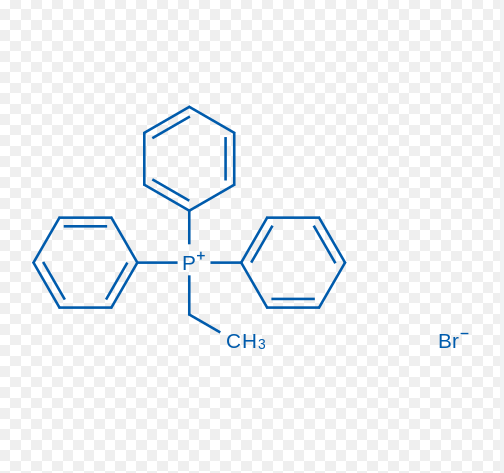
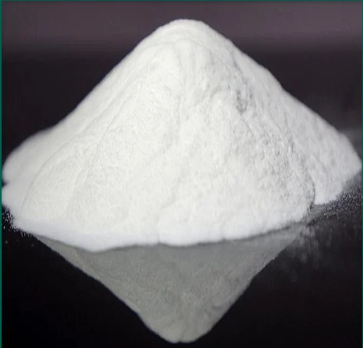
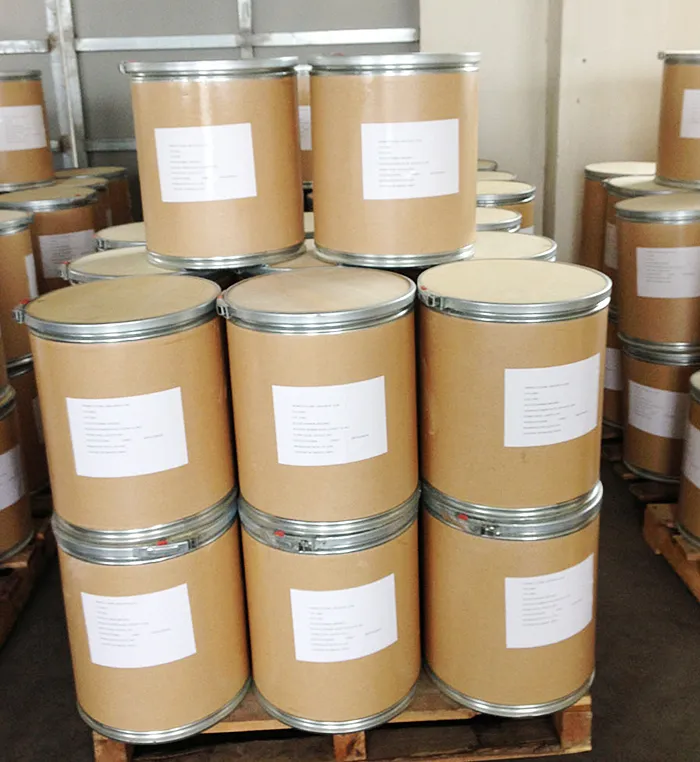
Ethyltriphenylphosphonium bromide CAS Number: 1530-32-1
| Product | Ethyltriphenylphosphonium bromide |
| CAS | 1530-32-1 |
| MF | C20H20BrP |
| Formula | Ethyltriphenylbromophosphine;ethyltriphenylphosphoniubromide;Ethyl(trisphenyl)phosphoniumbromide;EthyltriphenylphosphoniuMbroMidChemicalbooke(ETPB);TEP(oniuMcoMpound);
ETHYLTRIPHENYLPHOSPHONIUMBRIMIDE;ethyltriphenylphosphoiuumbromide;ETHYLTRIPHENYLPHOSPHONIUMBROMIDE99+% |
product description
Basic Info.
Ethyltriphenylphosphonium bromide Properties
| Melting point | 203-205 °C(lit.) |
|---|---|
| Boiling point | 240℃[at 101 325 Pa] |
| Density | 1.38[at 20℃] |
| vapor pressure | 0-0.1Pa at 20-25℃ |
| Flash point | 200 °C |
| storage temp. | Inert atmosphere,Room Temperature |
| solubility | 174g/l soluble |
| form | Crystalline Powder |
| color | White to off-white |
| Water Solubility | 120 g/L (23 ºC) |
| Sensitive | Hygroscopic |
| BRN | 3599630 |
| InChI | 1S/C20H20P.BrH/c1-2-21(18-12-6-3-7-13-18,19-14-8-4-9-15-19)20-16-10-5-11-17-20;/h3-17H,2H2,1H3;1H/q+1;/p-1 |
| InChIKey | JHYNXXDQQHTCHJ-UHFFFAOYSA-M |
| SMILES | [Br-].CC[P+](c1ccccc1)(c2ccccc2)c3ccccc3 |
| LogP | -0.69–0.446 at 35℃ |
| CAS DataBase Reference | 1530-32-1(CAS DataBase Reference) |
| FDA UNII | R85V84UL5V |
| EPA Substance Registry System | Phosphonium, ethyltriphenyl-, bromide (1530-32-1) |
| UNSPSC Code | 12352002 |
| NACRES | NA.22 |
SAFETY
Risk and Safety Statements
| Symbol(GHS) |   GHS05,GHS06 |
|---|---|
| Signal word | Danger |
| Hazard statements | H301-H318-H412 |
| Precautionary statements | P264-P270-P273-P280-P301+P310-P305+P351+P338 |
| PPE | dust mask type N95 (US), Eyeshields, Faceshields, Gloves |
| Hazard Codes | Xn,N,Xi |
| Risk Statements | 22-51/53-36/37/38-21/22 |
| Safety Statements | 61-36/37/39-26-36 |
| RIDADR | UN 3077 9/PG 3 |
| WGK Germany | 2 |
| TSCA | TSCA listed |
| HazardClass | 6.1 |
| PackingGroup | III |
| HS Code | 29310095 |
| Storage Class | 6.1D – Non-combustible acute toxic Cat.3 toxic hazardous materials or hazardous materials causing chronic effects |
| Hazard Classifications | Acute Tox. 3 Oral Aquatic Chronic 3 Eye Dam. 1 |
| Limited Quantities | 5.0 L (1.3 gallons) (liquid) or 5.0 kg (11 lbs) (solid) |
| Excepted Quantities | Max Inner Pack (30g or 30ml) and Max Outer Pack (1Kg or 1L) |
thyltriphenylphosphonium bromide Chemical Properties,Uses,Production
Chemical Properties
White to off-white crystalline powder
Uses
suzuki reaction
Uses
PTC catalyst
Uses
Ethyltriphenylphosphonium Bromide is used as a wittig reagent. Ethyltriphenylphosphonium Bromide and other phosphonium salts show antiviral activity.
Uses
Ethyltriphenylphosphonium Bromide (ETPB) is a phase transfer catalyst, used to accelerate the cure of phenolic-based epoxy resins, certain fluoroelastomer resins and thermosetting powder coatings. It is also used as catalysts in the synthesis of certain organic compounds and as a pharmaceutical intermediate.
- Ethyltriphenylphosphonium bromide acts as a reactant in the synthesis of D-amino acids from L-cysteine-derived thiazolidines, Leiodolide A through aldol reactions and Horner-Wadsworth-Emmons olefination.
- It is also used in the preparation of cycloalkanoindolines through diastereoselective intramolecular inimo-ene reactions.
- it is used as a reagent in solid-state metathesis polycondensation to prepare alkyl-dipropenylthiophene monomers.
- Mizoroki-Heck cyclization and cascading Tsuji-Trost cyclization reactions.
Flammability and Explosibility
Not classified
reaction suitability
reaction type: C-C Bond Formation
Synthesis
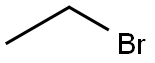
74-96-4
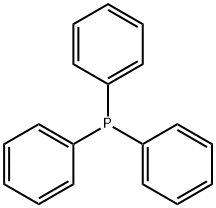
603-35-0
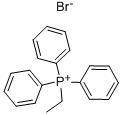
1530-32-1
In a 1500 mL three-necked flask, 54 g (0.5 mol) of ethyl bromide, 210 g (0.8 mol) of triphenylphosphine and 1000 mL of toluene were added sequentially. A reflux condenser tube was installed, magnetic stirring was turned on and the reaction was heated to reflux state and kept at reflux for 10 hours. Upon completion of the reaction, the reaction system was naturally cooled to 50 °C and a large amount of white solid was observed to precipitate. The solid product was collected by filtration through a Brinell funnel and the filter cake was washed with toluene three times (50 mL each time). The resulting solid was transferred to a vacuum drying oven and dried at 50 °C until constant weight, resulting in 170.4 g of ethyltriphenylphosphonium bromide in 91.8% yield.
Purification Methods
Recrystallise it from H2O and dry it in high vacuum at 100o. IR has bands at 1449, 1431 and 997cm-1 . [Wittig & Wittenberg Justus Liebigs Ann Chem 606 1 1957, Bergmann & Dusza J Org Chem 23 1245 1958, Beilstein 16 IV 982.]
References
[1] Journal of Fluorine Chemistry, 2002, vol. 113, # 2, p. 177 – 183
[2] Pharmazie, 1999, vol. 54, # 1, p. 26 – 30
[3] Bulletin of the Academy of Sciences of the USSR, Division of Chemical Science (English Translation), 1989, vol. <2> 38, # 12, p. 2553 – 2556
[4] Izvestiya Akademii Nauk SSSR, Seriya Khimicheskaya, 1989, vol. <2> 38, # 12, p. 2789 – 2792
[5] Journal of the American Chemical Society, 1980, vol. 102, p. 2437
Ethyltriphenylphosphonium bromide Preparation Products And Raw materials
FAQ
Q1: About the after-sale service of products
A: After purchasing the products from our factory, we have A professional technical team and after-sales team to serve you and solve all your problems in the future.
Q2: Can I get some samples?
A: Yes, we can provide samples, but the customer will pay the freight.
Q3: How do I start paying?
Payment can be made by wire transfer or T/T, apple_pay, google_pay, gc_real_time_bank_transfer , etc.
Q4: How to confirm product quality before placing an order?
A: You can get free samples of some products. You just have to pay the shipping fee or arrange for the sample to be sent to us by express.
You can send us your product specifications and requirements and we will produce products according to your requirements.
Q5: What is your MOQ?
A: The minimum quantity we can order is 1kg.
But usually we can accept a smaller quantity, say 100g, at the cost of 100% sample charge.
Q6: Shipping Time?
A: We ship the parcel out in 1-2 days and offer tracking No.. Shipping time is different to different country. Please consult
| ACF Chemical Co., Ltd.
Leon phone/whatsapp:008615950692266 email:md@acfchemical.com No. 45 Pengwan Road, Qianwan Bonded Port Area, Qingdao Area, China (Shandong) |
|
| DMEA | 108-01-0 |
| Dodecyl trimethyl ammonium chloride | 112-00-5 |
| N-Hexadecyltrimethylammonium chloride | 112-02-7 |
| 1831 | 112-03-8 |
| 1631Br | 57-09-0 |
| D821 | 5538-94-3 |
| D8/1021 | 68424-95-3 |
| D1021 | 7173-51-5 |
| D1821 | 61789-80-8 |
| TEP88 | 157905-74-3 |
| 1227 C12 | 139-07-1 |
| DMPT(N,N-Dimethyl-p-toluidine) | 99-97-8 |
| NDPT(N,N-dihydroxyethyl-p-toluidine) | 3077-12-1. |
| DMA(N,N-dimethylaniline) | 121-69-7 |
| N,N-Diethylaniline | 91-66-7 |
| MT(M-Toluidine) | 108-44-1 |
| PT(P-Toluidine) | 106-49-0 |
| O-Toluidine OT | 95-53-4 |
| Dimethyl(octyl)amine | 7378-99-6/1120-24-7 |
| C16-18-alkyldimethyl Octadecyl/Hexadecyl dimethylamines | 68390-97-6 |
| Octadecyl/behenyl dimethylamines | 124046-42-0 |
| N,N-dimethyldocosylamine | 21542-96-1 |
| N-Methyldioctylamine | 4455-26-9 |
| Di(octyl/decyl) methylamines | 308062-61-5 |
| Didecyl methylamine | 7396-58-9 |
| N-methyldidodecylamine | 2915-90-4 |
| Dipalmitamine | 16724-61-1 |
| Trioctylamine | 1116-76-3 |
| Trioctylamine | 68814-95-9 |
| N-3-Laurylamidopropyl dimethylamine | 3179-80-4 |
| N-3-(Hydrogenated cocoamido)propyl dimethylamines | 288095-05-6 |
| N-3-Oleylamidopropyl dimethylamine | 109-28-4 |
| N-3-Erucylamidopropyl dimethylamine | 60270-33-9 |
| N-Oleyl 1,3-propanediamine | 7173-62-8 |
| Bis(aminopropyl)laurylamine | 2372-82-9 |
| N-tallow alkyltripropylenetetra | 68911-79-5 |
| 3-(isodecyloxy)propylamine | 30113-45-2 |
| N-[3-(isodecyloxy)propyl]propane-1,3-diamine | 72162-46-0 |
| 2-(Methylamino)ethanol | 109-83-1 |
| N-Methyldiethanolamine | 105-59-9 |
| 3-Methoxy propyl amine | 5332-73-0 |
| N,N-dimethylcyclohexylamine | 98-94-2 |
| 1,3,5-Tris[3-(dimethylamino)propyl]hexahydro-1,3,5-triazine | 15875-13-5 |
| N,N,N’-trimethylamino-N’-ethylethanolamine | 2212-32-0 |
| N,N-Dimethylethanolamine | 108-01-1 |
| Acetone | |
| Acrylic acid | |
| Adipic acid | |
| Alpha-Methylstyrene (AMS) | |
| Benzoic Acid | |
| Bisphenol A | |
| Butyl Acrylat (BA) | |
| Butyl acetate (Butac) | |
| Butyl diglycol (BDG) | |
| Butyl glycol | |
| Para-tertiary butyl benzoic acid (PTBBA) | |
| n-Butanol | |
| n-Butyl methacrylate (n-BUMA) | |
| para-tert. Butylphenol (PTBP) | |


