
Tetrabutylammonium bromide CAS Number: 1643-19-2
| Product | Tetrabutylammonium bromide |
| CAS | 1643-19-2 |
| MF | C16H36BrN |
| Formula | 1-Butanaminium,N,N,N-tributyl-,bromide;1-Butanaminium,N,N,N-tributyl-,bromide;n,n,n-tributyl-1-butanaminiubromide;ALIQUAT(ChemicalbookR)100;IPC-TBA-BR;Tetrabutylazaniumbromide;Tetrabutylaminium·bromide;Tetrabutylammoniumbromide,99%,forion-pairchromatography |
product description
Basic Info.
Tetrabutylammonium bromide Properties
| Melting point | 102-106 °C(lit.) |
|---|---|
| Boiling point | 102 °C |
| bulk density | 700kg/m3 |
| Density | 1.039 g/mL at 25 °C |
| vapor pressure | 0Pa at 25℃ |
| refractive index | n20/D 1.422 |
| Flash point | 100℃ |
| storage temp. | Store below +30°C. |
| solubility | H2O: 0.1 g/mL, clear, colorless |
| pka | 0[at 20 ℃] |
| form | Crystalline Powder |
| color | White to slightly cream |
| Specific Gravity | 1.007 |
| Odor | Amine like |
| PH | 3.5 to 7.0 (50 g/L, 25 ℃) |
| Water Solubility | 600 g/L (20 ºC) |
| λmax | λ: 240 nm Amax: 0.04 λ: 250 nm Amax: 0.03 λ: 260 nm Amax: 0.02 λ: 500 nm Amax: 0.02 |
| Sensitive | Hygroscopic |
| BRN | 3570983 |
| Stability | Stable. Incompatible with strong oxidizing agents. Protect from moisture. |
| Cosmetics Ingredients Functions | ANTIMICROBIAL ANTISTATIC |
| InChI | 1S/C16H36N.BrH/c1-5-9-13-17(14-10-6-2,15-11-7-3)16-12-8-4;/h5-16H2,1-4H3;1H/q+1;/p-1 |
| InChIKey | JRMUNVKIHCOMHV-UHFFFAOYSA-M |
| SMILES | [Br-].CCCC[N+](CCCC)(CCCC)CCCC |
| LogP | 0.839 at 25℃ |
| CAS DataBase Reference | 1643-19-2(CAS DataBase Reference) |
| FDA UNII | VJZ168I98R |
| NIST Chemistry Reference | Tetra-N-butylammonium bromide(1643-19-2) |
| EPA Substance Registry System | Tetrabutylammonium bromide (1643-19-2) |
| UNSPSC Code | 12352111 |
| NACRES | NB.21 |
SAFETY
Risk and Safety Statements
| Symbol(GHS) |  GHS07 |
|---|---|
| Signal word | Warning |
| Hazard statements | H302-H315-H319-H412 |
| Precautionary statements | P264-P270-P273-P301+P312-P302+P352-P305+P351+P338 |
| PPE | dust mask type N95 (US), Eyeshields, Gloves |
| Hazard Codes | Xi,Xn |
| Risk Statements | 36/37/38-22 |
| Safety Statements | 26-36-37/39 |
| WGK Germany | 3 |
| F | 3 |
| Hazard Note | Irritant |
| TSCA | TSCA listed |
| HS Code | 29239000 |
| Storage Class | 11 – Combustible Solids |
| Hazard Classifications | Acute Tox. 4 Oral Aquatic Chronic 3 Eye Irrit. 2 Repr. 2 Skin Irrit. 2 |
Tetrabutylammonium bromide Chemical Properties,Uses,Production
Physical and Chemical Properties
Tetrabutylammonium bromide, also known as tetrabutylammonium bromide. White crystal, deliquescence. 118 ℃ melting point. Soluble in water, alcohol, ether and acetone, slightly soluble in benzene.
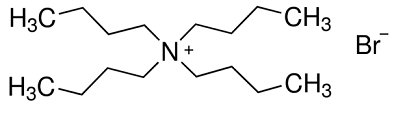
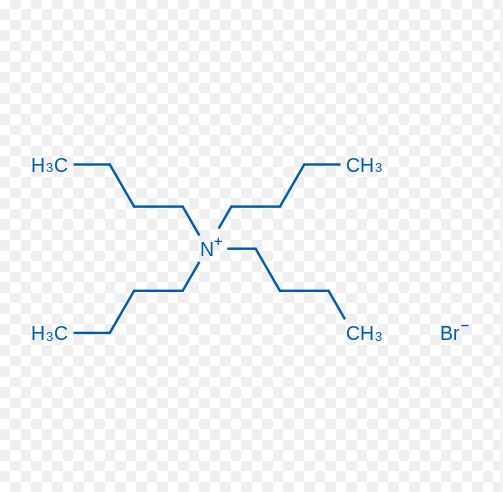
Figure 1: a structural formula of tetrabutylammonium bromide
Application
(1) Used as a reagent for the analysis of organic synthesis.
(2) Tetrabutylammonium bromide is also an effective phase transfer catalyst.
Phase transfer catalyst, referred to as PTC, is able to transfer the aqueous phase (or organic phase) to the organic phase (or aqueous phase) catalyst, which can make the reaction between the aqueous phase and the organic phase of the catalyst. PTC has the function of changing the degree of ion solvation, increasing the activity of ion reaction, speeding up the reaction rate and so on. Solve the problem of the past in the two phases of the reaction is difficult to react.
Common quaternary ammonium salt phase transfer catalysts are: benzyl triethyl ammonium chloride, trioctyl methyl ammonium chloride, tetramethyl ammonium bromide, tetrapropylammonium chloride, tetrabutylammonium bromide , tetrabutyl ammonium iodide, benzyl triethyl ammonium bromide, triethyl hexyl bromide, octyl triethylammonium bromide.
Phase transfer catalyst is widely applied in organic synthesis: R2C for preparing compounds (carbene type compound), further preparation of the corresponding nitrile, isonitrile, Halon, dichloromethane cyclopropane derivatives, hydroxy acids and diazomethane. For the alkylation reaction, compared with traditional methods, to avoid the harsh conditions of dry operation, and high yield, it can also be used in the redox reaction, ester hydrolysis, substitution reaction, condensation reaction, addition reaction, polymerization reaction, addition reaction of carbon and the elimination of reaction and so on.
(3) For organic synthesis intermediates, phase transfer catalyst
(4) Ion-pairing reagents for the synthesis of bacampicillin, sultamicillin like.
(5) Ion pair chromatography reagents, phase transfer catalyst. Bacampicillin, sultamicillin like synthesis.
Uses
Tetrabutylammonium bromide (TBAB) is a quaternary ammonium compound. It is the most widely used phase transfer catalyst. Its interfacial properties have been studied in case of hydroxide initiated reactions. This may be applied in understanding the mechanism of phase transfer reactions. TBAB is reported to decrease retention time and remove peak tailing by acting as an ion pair reagent during the chromatographic analysis of quaternary ammonium compounds. In the molten state TBAB behaves like an ionic liquid which is a promising green alternative to organic solvents in organic synthesis. Its molar heat capacity, entropy and free energy function have been determined.
Recently, molten tetrabutylammonium bromide (TBAB) was used as a low toxic and cost-effective IL in a number of constructive synthetic transformations.
Tetrabutylammonium bromide (TBAB) may be used in the molten state in the following processes:
Synthesis of (2S)-5-(3-phenyl-2-phthalimidylpropanoylamino)isophthalic acid.
Synthesis of alkyl-substituted pyrroles in the absence of catalyst and organic solvent.
Synthesis of dithioacetals from acetals by transthioacetalisation in a solvent free environment.
Synthesis of polyamides (PAs) by the polymerization of terephthalic acid and diisocyanates.
Catalyze the addition of thiols to conjugated alkenes.
Dehydrochlorination of poly(vinyl chloride).
preparation
Preparative Methods: several methods are available to recover the quaternary ammonium ion efficiently.Prepared by reaction of tri-n-butylamine and n-butyl bromide.
Toxicity
The acute oral LD50 (mouse): 590mg/kg. Inhalation, ingestion and skin contact toxic to the skin, eyes and respiratory system irritation.
More information from the ChemicalBook Xiaonan editor (2015-09-16).
Chemical Properties
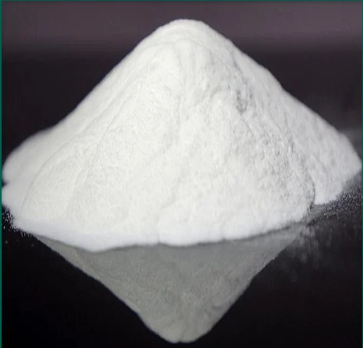
white crystals or powder
Uses
Tetrabutylammonium Bromide is used in the synthesis of polymer solar cells. Also used in the synthesis of single component green-light emitting electrochemical cells.
Definition
ChEBI: Tetrabutylammonium bromide is a tetrabutylammonium salt with bromide as the anionic counterpart. It is an organic bromide salt and a tetrabutylammonium salt.
benefits
Tetrabutylammonium bromide is an environmentally benign, non-volatile, non-flammable, non-corrosive, low-cost, commercially available ammonium salt with high thermal and chemical stability. In TBAB, tetrabutylammonium salt can dissolve in both aqueous as well as in organic solvents, which helps to transport the water-soluble anionic reactants into the organic phase. Moreover, molten TBAB was also employed as an efficient ionic liquid to carry out organic transformations under solvent-free conditions[1].
General Description
Tetrabutylammonium bromide, a quaternary ammonium compound widely used as a phase transfer catalyst. TBAB decreases the retention time and removes peak tailing by acting as an ion pair reagent during the chromatographic analysis of quaternary ammonium compounds. In the molten state, TBAB behaves like an ionic liquid, which is a promising green alternative to organic solvents in polymer synthesis.
Flammability and Explosibility
Not classified
Purification Methods
Crystallise the salt from *benzene (5mL/g) at 80o by adding hot n-hexane (three volumes) and allowing to cool. Dry it over P2O5 or Mg(ClO4)2, under vacuum. The salt is very hygroscopic. It can also be crystallised from ethyl acetate or dry acetone by adding diethyl ether and dried in vacuo at 60o for 2 days. It has been crystallised from acetone by addition of diethyl ether. It is so hygroscopic that all manipulations should be carried out in a dry-box. It has been purified by precipitation from a saturated solution in dry CCl4 on addition of cyclohexane or by recrystallisation from ethyl acetate, then heating in vacuum to 75o in the presence of P2O5. [Symons et al. J Chem Soc, Faraday Trans 1 76 2251 1908.] It also recrystallises from CH2Cl2/diethyl ether and is dried in a vacuum desiccator over P2O5. [Blau & Espenson J Am Chem Soc 108 1962 1986, Beilstein 4 IV 657.]
Toxics Screening Level
The ITSL for t-n-butyl ammonium bromide has been changed from 0.04 μg/m3 to 0.1 μg/m3 based on an annual averaging time.
FAQ
Q1: About the after-sale service of products
A: After purchasing the products from our factory, we have A professional technical team and after-sales team to serve you and solve all your problems in the future.
Q2: Can I get some samples?
A: Yes, we can provide samples, but the customer will pay the freight.
Q3: How do I start paying?
Payment can be made by wire transfer or T/T, apple_pay, google_pay, gc_real_time_bank_transfer , etc.
Q4: How to confirm product quality before placing an order?
A: You can get free samples of some products. You just have to pay the shipping fee or arrange for the sample to be sent to us by express.
You can send us your product specifications and requirements and we will produce products according to your requirements.
Q5: What is your MOQ?
A: The minimum quantity we can order is 1kg.
But usually we can accept a smaller quantity, say 100g, at the cost of 100% sample charge.
Q6: Shipping Time?
A: We ship the parcel out in 1-2 days and offer tracking No.. Shipping time is different to different country. Please consult
| ACF Chemical Co., Ltd.
Leon phone/whatsapp:008615950692266 email:md@acfchemical.com No. 45 Pengwan Road, Qianwan Bonded Port Area, Qingdao Area, China (Shandong) |
|
| DMEA | 108-01-0 |
| Dodecyl trimethyl ammonium chloride | 112-00-5 |
| N-Hexadecyltrimethylammonium chloride | 112-02-7 |
| 1831 | 112-03-8 |
| 1631Br | 57-09-0 |
| D821 | 5538-94-3 |
| D8/1021 | 68424-95-3 |
| D1021 | 7173-51-5 |
| D1821 | 61789-80-8 |
| TEP88 | 157905-74-3 |
| 1227 C12 | 139-07-1 |
| DMPT(N,N-Dimethyl-p-toluidine) | 99-97-8 |
| NDPT(N,N-dihydroxyethyl-p-toluidine) | 3077-12-1. |
| DMA(N,N-dimethylaniline) | 121-69-7 |
| N,N-Diethylaniline | 91-66-7 |
| MT(M-Toluidine) | 108-44-1 |
| PT(P-Toluidine) | 106-49-0 |
| O-Toluidine OT | 95-53-4 |
| Dimethyl(octyl)amine | 7378-99-6/1120-24-7 |
| C16-18-alkyldimethyl Octadecyl/Hexadecyl dimethylamines | 68390-97-6 |
| Octadecyl/behenyl dimethylamines | 124046-42-0 |
| N,N-dimethyldocosylamine | 21542-96-1 |
| N-Methyldioctylamine | 4455-26-9 |
| Di(octyl/decyl) methylamines | 308062-61-5 |
| Didecyl methylamine | 7396-58-9 |
| N-methyldidodecylamine | 2915-90-4 |
| Dipalmitamine | 16724-61-1 |
| Trioctylamine | 1116-76-3 |
| Trioctylamine | 68814-95-9 |
| N-3-Laurylamidopropyl dimethylamine | 3179-80-4 |
| N-3-(Hydrogenated cocoamido)propyl dimethylamines | 288095-05-6 |
| N-3-Oleylamidopropyl dimethylamine | 109-28-4 |
| N-3-Erucylamidopropyl dimethylamine | 60270-33-9 |
| N-Oleyl 1,3-propanediamine | 7173-62-8 |
| Bis(aminopropyl)laurylamine | 2372-82-9 |
| N-tallow alkyltripropylenetetra | 68911-79-5 |
| 3-(isodecyloxy)propylamine | 30113-45-2 |
| N-[3-(isodecyloxy)propyl]propane-1,3-diamine | 72162-46-0 |
| 2-(Methylamino)ethanol | 109-83-1 |
| N-Methyldiethanolamine | 105-59-9 |
| 3-Methoxy propyl amine | 5332-73-0 |
| N,N-dimethylcyclohexylamine | 98-94-2 |
| 1,3,5-Tris[3-(dimethylamino)propyl]hexahydro-1,3,5-triazine | 15875-13-5 |
| N,N,N’-trimethylamino-N’-ethylethanolamine | 2212-32-0 |
| N,N-Dimethylethanolamine | 108-01-1 |
| Acetone | |
| Acrylic acid | |
| Adipic acid | |
| Alpha-Methylstyrene (AMS) | |
| Benzoic Acid | |
| Bisphenol A | |
| Butyl Acrylat (BA) | |
| Butyl acetate (Butac) | |
| Butyl diglycol (BDG) | |
| Butyl glycol | |
| Para-tertiary butyl benzoic acid (PTBBA) | |
| n-Butanol | |
| n-Butyl methacrylate (n-BUMA) | |
| para-tert. Butylphenol (PTBP) | |


