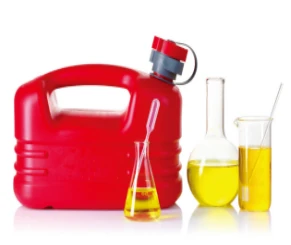
A summary of epoxy resin curing agent types, structures, characteristics, and curing mechanisms.
Epoxy resin curing agents react chemically with epoxy resins to form a three-dimensional network polymer, encapsulating the composite material’s reinforcing fibers within the network structure. They are additives that transform linear resins into tough, solid, three-dimensional structures.
Types of curing agents
Alkaline Curing Agents: These include aliphatic diamines and polyamines, aromatic polyamines, other nitrogen-containing compounds, and modified fatty amines.
Acidic Curing Agents: These include organic acids, acid anhydrides, and boron trifluoride and its complexes.
Addition-Type Curing Agents: These curing agents undergo an addition reaction with the epoxy group, forming a part of the cured product’s chain segment. Through stepwise polymerization, linear molecules are cross-linked into a three-dimensional network structure. These curing agents are also called guanidine-type curing agents.
Catalytic Curing Agents: These curing agents only initiate the reaction of the epoxy resin, opening the epoxy group and catalyzing the polymerization of the epoxy resin itself into a network structure, forming a homopolymer with ether bonds as the main structure.
Explicit Curing Agents: These are commonly used curing agents and can be divided into addition polymerization type and catalytic type. Addition polymerization involves opening the epoxy ring and undergoing an addition polymerization reaction, with the curing agent itself participating in the three-dimensional network structure. If too little of this type of curing agent is added, the cured product will contain unreacted epoxy groups.
Therefore, there is an optimal amount for this type of curing agent. Catalytic curing agents, on the other hand, cause ring-opening addition polymerization of the epoxy group via cationic or anionic mechanisms. Ultimately, the curing agent does not participate in the network structure, so there is no optimal stoichiometric amount; however, increasing the amount will increase the curing speed.
Among explicit curing agents, dicyandiamide and adipic acid dihydrazide are insoluble in epoxy resin at room temperature, but dissolve and begin the curing reaction at high temperatures, thus exhibiting a latent state. Therefore, they can be called functional latent curing agents.
Latent Curing Agents: These are curing agents that, when mixed with epoxy resin, remain relatively stable at room temperature for a long period (epoxy resins generally require more than 3 months for practical value, ideally 6 months or more), and only begin the curing reaction when exposed to heat, light, or moisture. These types of curing agents essentially use physical and chemical methods to block the activity of the curing agent. Therefore, some books classify these varieties as latent curing agents, and they can actually be called functional latent curing agents.
Because latent curing agents can be mixed with epoxy resins to form a one-component system, simplifying the compounding procedures for epoxy resin applications, their application range is expanding from single-component adhesives to coatings, impregnating varnishes, potting compounds, and powder coatings. Latent curing agents are receiving increasing attention abroad and are considered a key research and development topic. Various modified curing agents and new compounding technologies are constantly emerging, making this a very active field.
Amine curing agents: Primary and secondary amines cure epoxy resins by the active hydrogen on the nitrogen atom opening the epoxy group, leading to cross-linking and curing. Aliphatic polyamines such as ethylenediamine, hexamethylenediamine, diethylenetriamine, triethylenetetramine, and diethylaminopropylamine are highly reactive and can cross-link and cure epoxy resins at room temperature; while aromatic polyamines have lower activity, such as m-phenylenediamine, which requires curing at 150°C for complete curing.
Anhydride curing agents: Dicarboxylic acids and their anhydrides, such as maleic anhydride and phthalic anhydride, can cure epoxy resins, but require baking at higher temperatures for complete curing. The anhydride first reacts with the hydroxyl groups in the epoxy resin to form a monoester, and the carboxyl group in the monoester undergoes addition esterification with the epoxy group to form a diester.
Synthetic resin curing agents: Low-molecular-weight polyamide resins are amber-colored viscous resins produced by the reaction of linoleic acid dimer or tung oil acid dimer with aliphatic polyamines such as ethylenediamine and diethylenetriamine.
Latent curing agents: These curing agents are stable under normal conditions, but only exhibit their activity and cure the epoxy resin when heated to a certain temperature. For example, dicyandiamide, when mixed with epoxy resin, is stable at room temperature. However, at 145-165°C, it can cure the epoxy resin within 30 minutes. Boron nitride triethylamine complex is stable at room temperature and can cure epoxy resins at temperatures above 100°C.
02 The three stages of epoxy resin curing
Liquid – Working Time: The working time (also known as pot life or usable life) is part of the curing time, during which the resin/hardener mixture remains liquid and workable and suitable for application. To ensure reliable bonding, all application and positioning work should be completed within the working time.
Gel – Entering the Curing Phase: The mixture begins to enter the curing phase (also called the maturation stage), at which point it begins to gel or “set.” At this stage, the epoxy no longer has a long working time and will lose its tackiness. No interference should be applied at this stage. It will become a soft, rubbery gel that you can still press with your thumb. Because the mixture is only partially cured at this point, newly applied epoxy resin can still chemically bond with it; therefore, the untreated surface can still be bonded or reacted with. However, these capabilities decrease as the mixture approaches full cure.
Solid – Final Cure: The epoxy mixture reaches the final curing stage and becomes a solid, at which point it can be sanded and shaped. At this point, you can no longer press it with your thumb. The epoxy resin has approximately 90% of its final reaction strength, so the clamping devices can be removed, and it can be left at room temperature for several days to continue curing. At this stage, newly applied epoxy resin cannot chemically bond with it, as the epoxy surface must be properly pre-treated, such as by sanding, to achieve good adhesive mechanical strength.
03 Curing temperature of the curing agent and the heat resistance of the cured product
The curing temperatures of various curing agents differ, and the heat resistance of the cured products also varies considerably. Generally, using a curing agent with a higher curing temperature results in a cured product with excellent heat resistance. For addition polymerization type curing agents, the curing temperature and heat resistance increase in the following order:
Aliphatic polyamines < alicyclic polyamines < aromatic polyamines ≈ phenolic resins < anhydrides
The heat resistance of catalytic addition polymerization type curing agents is roughly at the level of aromatic polyamines. The heat resistance of anionic polymerization type (tertiary amines and imidazole compounds) and cationic polymerization type (BF3 complexes) is basically the same, mainly because although the initial reaction mechanisms are different, they all ultimately form a network structure with ether bonds.
The curing reaction is a chemical reaction and is greatly affected by the curing temperature. Increasing the temperature increases the reaction rate and shortens the gel time; the logarithm of the gel time generally decreases linearly with increasing curing temperature. However, excessively high curing temperatures often lead to a decrease in the performance of the cured product, so there is an upper limit to the curing temperature; a temperature that balances the curing speed and the performance of the cured product must be selected as the appropriate curing temperature.
According to the curing temperature, curing agents can be divided into four categories: low-temperature curing agents (curing temperature below room temperature); room-temperature curing agents (curing temperature from room temperature to 50°C); medium-temperature curing agents (50-100°C); and high-temperature curing agents (curing temperature above 100°C). There are very few types of low-temperature curing agents, including polythiol type and polyisocyanate type;
In recent years, T-31 modified amine and YH-82 modified amine, developed and put into production in China, can be cured below 0°C. There are many types of room-temperature curing agents: aliphatic polyamines, alicyclic polyamines; low-molecular-weight polyamides, and modified aromatic amines, etc. Medium-temperature curing agents include some alicyclic polyamines, tertiary amines, imidazoles, and boron trifluoride complexes. High-temperature curing agents include aromatic polyamines, anhydrides, novolac phenolic resins, amino resins, dicyandiamide, and acyl hydrazines. For high-temperature curing systems, the curing temperature is generally divided into two stages: low-temperature curing before gelation, followed by high-temperature heating for post-curing after reaching the gel state or a state slightly above the gel state. The initial curing stage is referred to as pre-curing.
04 Structure and properties of curing agents
As mentioned above, the curing temperature of the curing agent is closely related to the heat resistance of the cured product. Similarly, within the same class of curing agents, even with the same functional group, differences in chemical structure lead to different properties and characteristics of the cured product. Therefore, a comprehensive understanding of the properties and characteristics of polyamine curing agents with the same functional group but different chemical structures is crucial for selecting the appropriate curing agent.
In terms of color, cycloaliphatic amines are the lightest, essentially transparent, while aliphatic and aromatic amines show significant coloration. Viscosity also varies considerably; cycloaliphatic amines have viscosities of only a few hundredths of a Pa·s, while polyamides are very viscous, reaching several Pa·s, and aromatic amines are mostly solid. The pot life is inversely related to the curing rate; aliphatic amines have the highest reactivity, followed by cycloaliphatic, amide, and aromatic amines in decreasing order.
Color: (Best) Cycloaliphatic → Aliphatic → Amide → Aromatic Amine (Worst)
Viscosity: (Low) Cycloaliphatic → Aliphatic → Aromatic → Amide (High)
Pot Life: (Long) Aromatic → Amide → Cycloaliphatic → Aliphatic (Short)
Curing Rate: (Fast) Aliphatic → Cycloaliphatic → Amide → Aromatic (Slow)
Irritancy: (Strong) Aliphatic → Aromatic → Cycloaliphatic → Amide (Weak)
Chemical Structure and Properties of Polyamine Curing Agents
In addition, certain regularities are also observed in terms of gloss, flexibility, adhesion, acid resistance, and water resistance. Gloss: (Excellent) Aromatic → Aliphatic → Polyamide-Aliphatic Amine (Poor)
Flexibility: (Soft) Polyamide → Aliphatic → Alicyclic → Aromatic (Rigid)
Adhesion: (Excellent) Polyamide → Alicyclic → Aliphatic → Aromatic (Good)
Acid Resistance: (Excellent) Aromatic → Alicyclic → Aliphatic → Polyamide (Poor)
Water Resistance: (Excellent) Polyamide → Aliphatic Amine → Alicyclic Amine → Aromatic Amine (Good)
Chemical Structure of Polyamine Curing Agents and Properties of Cured Bisphenol A Resin
For gloss, aromatic compounds are the best, and aliphatic compounds are the worst. This property is affected by the curing temperature; the gloss improves with increasing temperature. Regarding flexibility, polyamides with longer distances between functional groups are superior, while aromatic amines with high crosslinking density are inferior. Heat resistance is the opposite of flexibility, while adhesion is consistent with flexibility. Chemical resistance (acid resistance) is affected by the chemical structure; aromatic compounds are relatively superior, while aliphatic amines and polyamides are easily corroded by chemicals. Water resistance is governed by the mass concentration of functional groups; polyamides with low mass concentration of functional groups and high hydrophobicity are more water-resistant, while aromatic compounds with high mass concentration of functional groups are less so.
05 Various curing agents for different applications
Curing agents can be classified into room-temperature curing agents and heat-curing agents according to their application. As mentioned earlier, epoxy resins generally exhibit excellent properties when cured at high temperatures. However, coatings and adhesives used in civil engineering and construction require room-temperature curing due to the difficulty of heating; therefore, aliphatic amines, cycloaliphatic amines, and polyamides are mostly used. Especially in winter, coatings and adhesives have to be used in combination with polyisocyanates or malodorous polythiols.
As for medium-temperature and high-temperature curing agents, the selection should be based on the heat resistance of the substrate, as well as the heat resistance, adhesion, and chemical resistance of the cured product. The main choices are polyamines and anhydrides. Because anhydride-cured products have excellent electrical properties, they are widely used in electronics and electrical applications.
Aliphatic polyamine-cured products have excellent adhesion, alkali resistance, and water resistance. Aromatic polyamines also exhibit excellent chemical resistance. Due to the formation of hydrogen bonds between the nitrogen element of the amino group and metals, they have excellent anti-corrosion effects. The higher the concentration of amine, the better the anti-corrosion effect. Anhydride curing agents form ester bonds with epoxy resins, showing high resistance to organic and inorganic acids, and generally exceeding polyamines in electrical properties.
06 Curing Mechanism of Anhydride Curing Agents
The curing reaction of anhydride-cured epoxy resins requires small amounts of accelerators such as alcohols, water, and free acids in the resin/anhydride system, and proceeds slowly upon heating. Therefore, anhydrides do not directly react with epoxy groups; the anhydride ring must be opened.
- Influence of active hydrogen on anhydride ring opening. Bisphenol A epoxy contains hydroxyl groups, which can open the anhydride ring. One hydroxyl group produces one carboxyl group, and polyols can link two anhydride molecules together, acting as a crosslinking agent. Adding hydroxyl-containing compounds such as ethylene glycol, glycerol, and hydroxyl-containing low-molecular-weight polyethers can accelerate the ring-opening reaction. Water can cause the anhydride to produce two carboxyl groups; therefore, humidity affects anhydride curing.
Esterification reaction: This is the main reaction in anhydride-cured epoxy resins. The carboxyl group adds to the epoxy group, forming an ester group. The carboxyl group generated by the esterification reaction further opens the anhydride ring and reacts with the epoxy group, finally forming a three-dimensional structure; at high temperatures, some carboxyl groups can catalyze the ring opening of epoxy groups, forming a structure mainly composed of ether bonds. - Influence of tertiary amines on anhydride ring opening. Tertiary amines form an ion pair with the anhydride. The epoxy group inserts into this ion pair, and the carboxylate anion opens the epoxy group, forming an ester bond and producing a new anion. Examples include 2-ethyl-4-methylimidazole and 2,4,6-(N,N-dimethylaminomethyl)-phenol (also known as K-54# or DMP-30#).