
![ISO Certified Reference Material Purity Degree 99% CAS No. 15629-92-2 [1 3-Bis (diphenylphosphino) Propane]Nickel (II)](https://acfchemical.com/wp-content/uploads/2026/01/High-Purity-Dmt-CAS-120-61-6-Powder-Agrochemical-and-Syntheses-Material-Int1.webp)
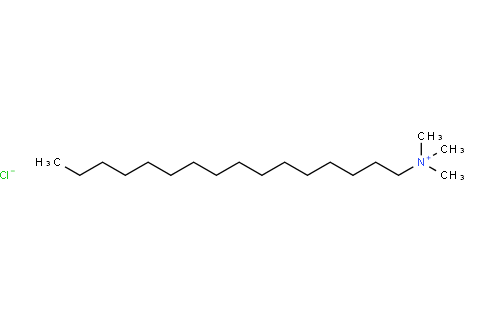
N-Hexadecyltrimethylammonium chloride CAS Number: 112-02-7
| Product | Cetyl Trimethyl Ammonium Chloride |
| CAS | 112-02-7 |
| Formula | C16H33(CH3)3NCl |
| Synonym | N,N,N-trimethylhexadecan-1-aminium chloride, 1-Hexadecanaminium, N,N,N-trimethyl-, chloride (1:1), 1-Hexadecanaminium, N,N,N-trimethyl-, chloride |
product description
Product Information
PHYSICAL AND CHEMICAL PROPERTIES
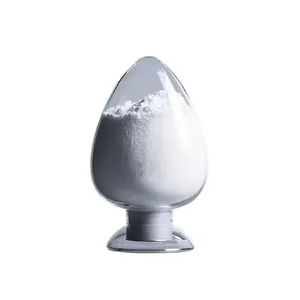
Appearance : solid
Color : white
Odor : No data available
Odor Threshold : No data available
pH : 4.0 – 7.5 (25 °C)
Concentration: 50 g/l
(as aqueous solution)
Melting point/freezing point : 234 °C
Boiling point/boiling range : No data available
Flash point : No data available
Evaporation rate : No data available
Flammability : No data available
Upper explosion limit / Upper
flammability limit
: No data available
Lower explosion limit / Lower
flammability limit
: No data available
Vapor pressure : No data available
Solubility(ies)
Water solubility : No data available
Solubility in other solvents : No data available
Partition coefficient: noctanol/water: 3.23
Autoignition temperature : No data available
Decomposition temperature : No data available
HAZARDS IDENTIFICATION
Emergency Overview
Appearance : Solid form
Color : white
Harmful if swallowed. May be harmful in contact with skin. Causes skin irritation. Causes serious eye irritation. May cause respiratory irritation. Very toxic to aquatic life with long lasting effects.
GHS Classification
Acute toxicity (Oral) : Category 4
Acute toxicity (Dermal) : Category 5
Skin corrosion/irritation : Category 2
Serious eye damage/eye irritation : Category 2A
Specific target organ toxicity –
single exposure
: Category 3 (respiratory tract irritation)
Short-term (acute) aquatic hazard : Category 1
Long-term (chronic) aquatic hazard
: Category 1
GHS label elements
Hazard pictograms :
Signal Word : Warning
Hazard Statements : H302 Harmful if swallowed.
H313 May be harmful in contact with skin.
H315 Causes skin irritation.
H319 Causes serious eye irritation.
H335 May cause respiratory irritation.
H410 Very toxic to aquatic life with long lasting effects.
Precautionary Statements : Prevention:
P261 Avoid breathing dust/ fume/ gas/ mist/ vapors/ spray.
P264 Wash skin thoroughly after handling.
P270 Do not eat, drink or smoke when using this product.
P271 Use only outdoors or in a well-ventilated area.
P273 Avoid release to the environment.
P280 Wear protective gloves/ eye protection/ face protection.
Response:
P301 + P312 + P330 IF SWALLOWED: Call a POISON CENTER/
doctor if you feel unwell. Rinse mouth.
P302 + P352 IF ON SKIN: Wash with plenty of water.
P304 + P340 + P312 IF INHALED: Remove person to fresh air and
keep comfortable for breathing. Call a POISON CENTER/ doctor if you
feel unwell.
P305 + P351 + P338 IF IN EYES: Rinse cautiously with water for
several minutes. Remove contact lenses, if present and easy to do.
Continue rinsing.
P312 Call a POISON CENTER/ doctor if you feel unwell.
P332 + P313 If skin irritation occurs: Get medical advice/ attention.
P337 + P313 If eye irritation persists: Get medical advice/ attention.
P362 + P364 Take off contaminated clothing and wash it before reuse.
P391 Collect spillage.
Storage:
P403 + P233 Store in a well-ventilated place. Keep container tightly
closed.
P405 Store locked up.
Disposal:
P501 Dispose of contents/ container to an approved waste disposal
plant.
Physical and chemical hazards
Not classified based on available information.
Health hazards
Harmful if swallowed. May be harmful in contact with skin. Causes skin irritation. Causes serious eye irritation. May cause respiratory irritation.
Environmental hazards
Very toxic to aquatic life. Very toxic to aquatic life with long lasting effects.
Other hazards which do not result in classification
None known.
FIRST AID MEASURES
If inhaled : Remove person to fresh air and keep comfortable for breathing.
Call a POISON CENTER or doctor/ physician if you feel unwell.
In case of skin contact : Take off all contaminated clothing immediately.
Wash off with soap and plenty of water.
Call a POISON CENTER or doctor/ physician if you feel unwell.
In case of eye contact : Rinse with plenty of water.
If easy to do, remove contact lens, if worn.
If eye irritation persists: Get medical advice/ attention.
If swallowed : Call a POISON CENTER or doctor/ physician if you feel unwell.
Rinse mouth.
Most important symptoms and
effects, both acute and delayed: None known.
FIRE-FIGHTING MEASURES
Suitable extinguishing media : Dry powder, Foam, Water spray, Carbon dioxide (CO2)
Specific hazards during fire
fighting
: No information available.
Specific extinguishing methods : Use extinguishing measures that are appropriate to local circumstances and the surrounding environment.
Immediately evacuate personnel to safe areas.
Remove undamaged containers from fire area if it is safe to do so.
Special protective equipment for
fire-fighters : Use personal protective equipment.
ACCIDENTAL RELEASE MEASURES
Personal precautions, protective
equipment and emergency procedures
: Wear suitable protective equipment.
Keep people away from and upwind of spill/leak.
Entry to non-involved personnel should be controlled around the
leakage area by roping off, etc.
Environmental precautions : Should not be released into the environment.
Methods and materials for containment and cleaning up: Pick up and arrange disposal without creating dust.
HANDLING AND STORAGE
Handling
Technical measures : Prevent dispersion of dust.
Local/Total ventilation : Ensure adequate ventilation.
Handle product only in closed system or provide appropriate exhaust
ventilation at machinery.
Use a local exhaust ventilation.
Advice on safe handling : Avoid contact with skin, eyes and clothing.
Wear personal protective equipment.
Wash hands and face thoroughly after handling.
Avoidance of contact : Oxidizing agents
Storage
Conditions for safe storage : Keep container tightly closed.
Store in a cool and shaded area.
Keep in a well-ventilated place.
Protect from moisture.
Keep under inert gas.
Store locked up.
EXPOSURE CONTROLS/PERSONAL PROTECTION
Ingredients with workplace control parameters
Contains no substances with occupational exposure limit values.
Engineering measures : Install a closed system or local exhaust.
Also install safety shower and eye bath.
Personal protective equipment
Respiratory protection : Dustproof gas mask
Self-contained breathing apparatus
Eye/face protection : Safety glasses
Safety goggles
Face-shield
Skin and body protection : Impervious protective clothing
Hand protection : Impervious gloves
*Use personal protective equipment(PPE) approved under appropriate government standards and
follow local and national regulations.
STABILITY AND REACTIVITY
Reactivity : No data available
Chemical stability : Stable under normal conditions.
Possibility of hazardous reactions : None under normal processing.
Conditions to avoid : Exposure to moisture.
Incompatible materials : Oxidizing agents
Hazardous decomposition products: Carbon monoxide, Carbon dioxide (CO2), Nitrogen oxides (NOx),Hydrogen chloride gas
TOXICOLOGICAL INFORMATION
Acute toxicity
Product:
Acute oral toxicity : Assessment: The component/mixture is moderately toxic after single
ingestion.
Acute dermal toxicity : Assessment: The component/mixture is minimally toxic after single
contact with skin.
Components:
Hexadecyltrimethylammonium Chloride:
Acute oral toxicity : LDLo (Mouse): 400 mg/kg
Assessment: The component/mixture is moderately toxic after single
ingestion.
Acute dermal toxicity : LD50 (Rabbit): 4,300 mg/kg
Assessment: The component/mixture is minimally toxic after single
contact with skin.
Skin corrosion/irritation
Product:
Result : Skin irritation
Components:
Hexadecyltrimethylammonium Chloride:
Result : Skin irritation
Serious eye damage/eye irritation
Product:
Result : Eye irritation
TRANSPORT INFORMATION
International Regulations
IATA-DGR
UN/ID No. : UN 3077
Proper shipping name : Environmentally hazardous substance, solid, n.o.s.
Class : 9
Packing group : III
IMDG-Code
UN number : UN 3077
Proper shipping name : ENVIRONMENTALLY HAZARDOUS SUBSTANCE, SOLID, N.O.S.
Class : 9
Packing group : III
EmS Code : F-A, S-F
Domestic regulation
GB 6944/12268
UN number : UN 3077
Proper shipping name : ENVIRONMENTALLY HAZARDOUS SUBSTANCE, SOLID, N.O.S.
Class : 9
Packing group : III
| ACF Chemical Co., Ltd. Leon : phone/whatsapp:008615950692266 email:md@acfchemical.com No. 45 Pengwan Road, Qianwan Bonded Port Area, Qingdao Area, China (Shandong) welcome to vist our factory. sample is free ACF Chemical Qingdao Co., Ltd. was established in 1987. the company has over decades of experience in the production of methacrylate and acrylate series products, as well as high-efficiency polymerization inhibitors and rubber and plastic antioxidant series products. The company’s leading products are high-efficiency polymerization inhibitor series products, with an annual production capacity of 1,000 tons of tert-butylhydroquinone (TBC), 800 tons of polymerization inhibitor TH-701, 500 tons of polymerization inhibitor TH-A294, 500 tons of polymerization inhibitor TH-100BE, 500 tons of phenothiazine, and 200 tons of hydroquinone. |
|
| DMEA | 108-01-0 |
| Dodecyl trimethyl ammonium chloride | 112-00-5 |
| N-Hexadecyltrimethylammonium chloride | 112-02-7 |
| 1831 | 112-03-8 |
| 1631Br | 57-09-0 |
| D821 | 5538-94-3 |
| D8/1021 | 68424-95-3 |
| D1021 | 7173-51-5 |
| D1821 | 61789-80-8 |
| TEP88 | 157905-74-3 |
| 1227 C12 | 139-07-1 |
| DMPT(N,N-Dimethyl-p-toluidine) | 99-97-8 |
| NDPT(N,N-dihydroxyethyl-p-toluidine) | 3077-12-1. |
| DMA(N,N-dimethylaniline) | 121-69-7 |
| N,N-Diethylaniline | 91-66-7 |
| MT(M-Toluidine) | 108-44-1 |
| PT(P-Toluidine) | 106-49-0 |
| O-Toluidine OT | 95-53-4 |
| Dimethyl(octyl)amine | 7378-99-6/1120-24-7 |
| C16-18-alkyldimethyl Octadecyl/Hexadecyl dimethylamines | 68390-97-6 |
| Octadecyl/behenyl dimethylamines | 124046-42-0 |
| N,N-dimethyldocosylamine | 21542-96-1 |
| N-Methyldioctylamine | 4455-26-9 |
| Di(octyl/decyl) methylamines | 308062-61-5 |
| Didecyl methylamine | 7396-58-9 |
| N-methyldidodecylamine | 2915-90-4 |
| Dipalmitamine | 16724-61-1 |
| Trioctylamine | 1116-76-3 |
| Trioctylamine | 68814-95-9 |
| N-3-Laurylamidopropyl dimethylamine | 3179-80-4 |
| N-3-(Hydrogenated cocoamido)propyl dimethylamines | 288095-05-6 |
| N-3-Oleylamidopropyl dimethylamine | 109-28-4 |
| N-3-Erucylamidopropyl dimethylamine | 60270-33-9 |
| N-Oleyl 1,3-propanediamine | 7173-62-8 |
| Bis(aminopropyl)laurylamine | 2372-82-9 |
| N-tallow alkyltripropylenetetra | 68911-79-5 |
| 3-(isodecyloxy)propylamine | 30113-45-2 |
| N-[3-(isodecyloxy)propyl]propane-1,3-diamine | 72162-46-0 |
| 2-(Methylamino)ethanol | 109-83-1 |
| N-Methyldiethanolamine | 105-59-9 |
| 3-Methoxy propyl amine | 5332-73-0 |
| N,N-dimethylcyclohexylamine | 98-94-2 |
| 1,3,5-Tris[3-(dimethylamino)propyl]hexahydro-1,3,5-triazine | 15875-13-5 |
| N,N,N’-trimethylamino-N’-ethylethanolamine | 2212-32-0 |
| N,N-Dimethylethanolamine | 108-01-1 |
| Acetone | |
| Acrylic acid | |
| Adipic acid | |
| Alpha-Methylstyrene (AMS) | |
| Benzoic Acid | |
| Bisphenol A | |
| Butyl Acrylat (BA) | |
| Butyl acetate (Butac) | |
| Butyl diglycol (BDG) | |
| Butyl glycol | |
| Para-tertiary butyl benzoic acid (PTBBA) | |
| n-Butanol | |
| n-Butyl methacrylate (n-BUMA) | |
| para-tert. Butylphenol (PTBP) | |


