
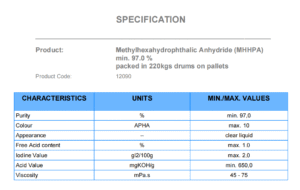
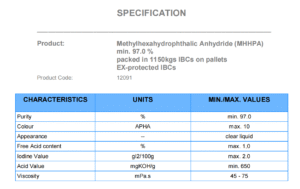
Composition / information on ingredients

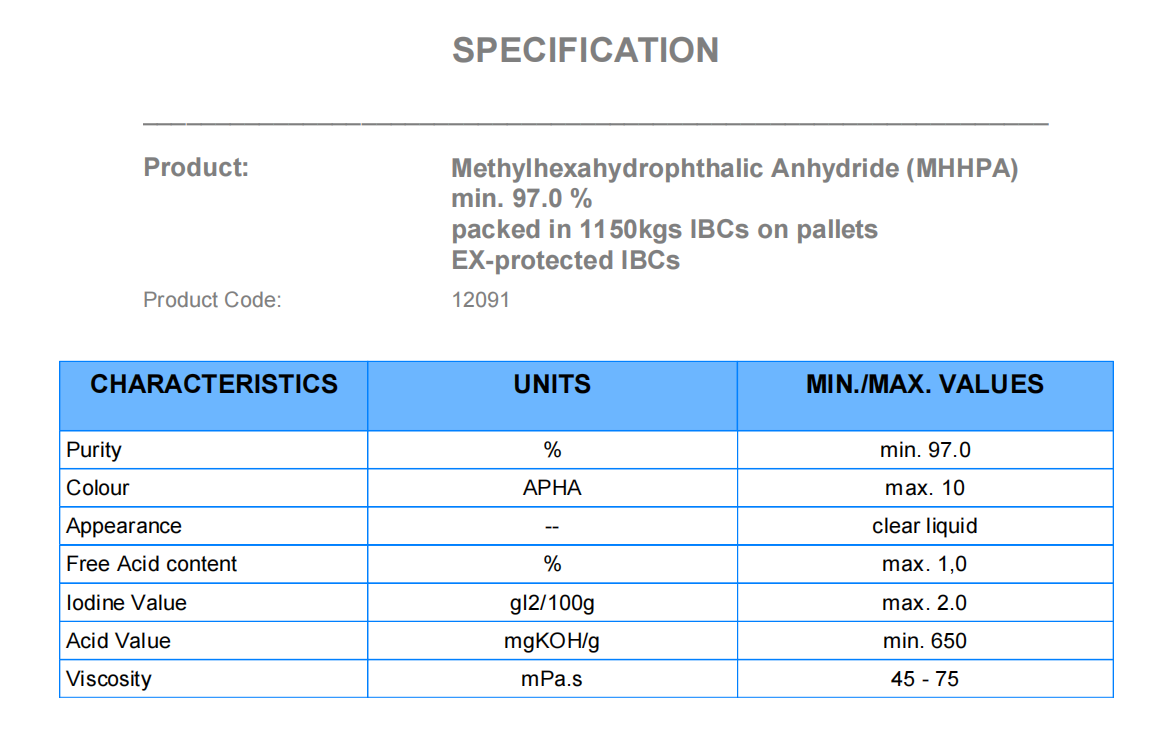
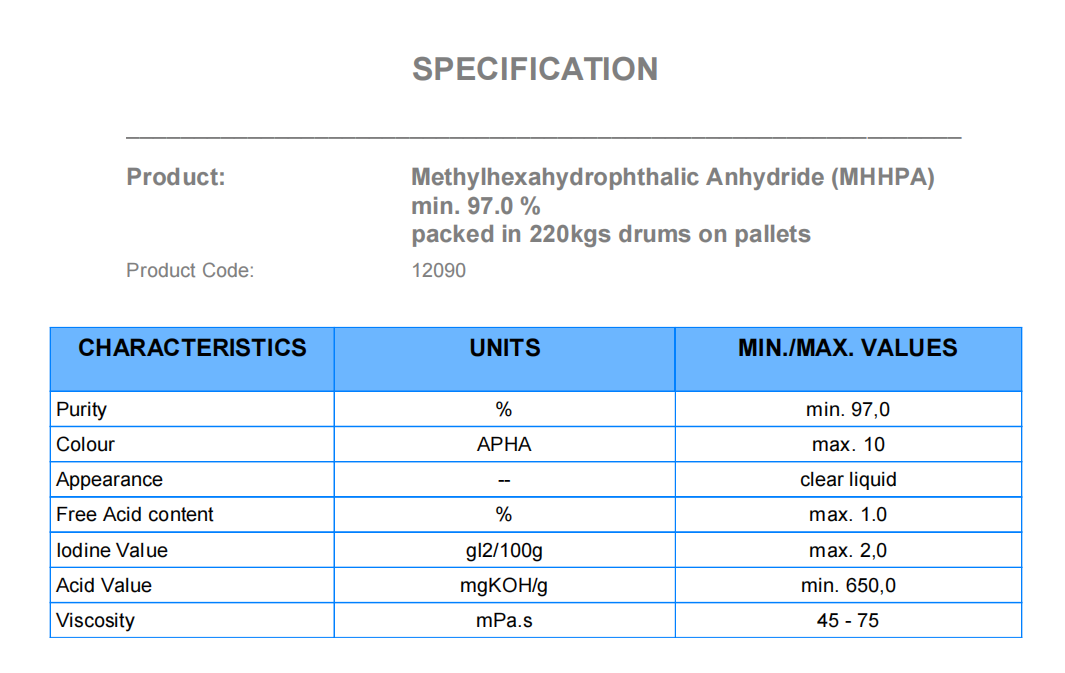
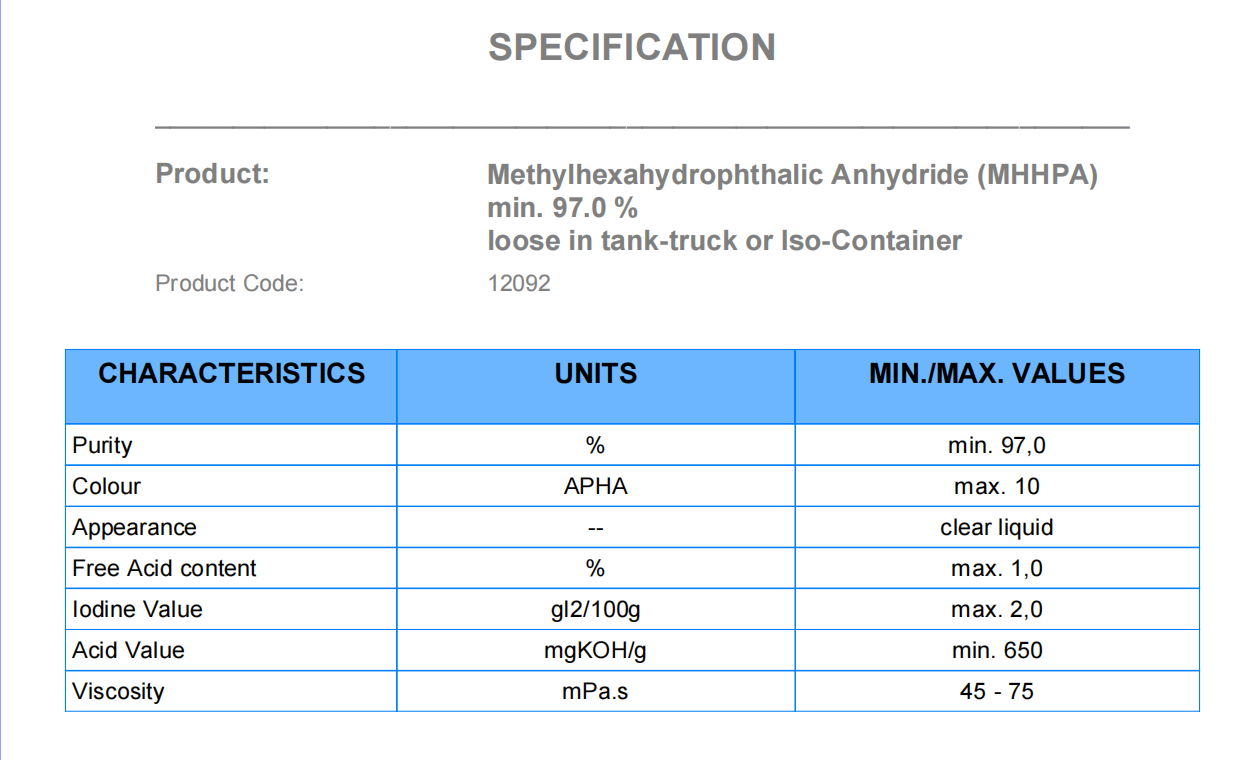
Methyl Hexahydrophthalic Anhydride (MHHPA) CAS No. 25550-51-0 Athena
- CAS No.
- 25550-51-0
- Chemical Name:
- Methylhexahydrophthalic anhydride
- Synonyms
- MeHHPA;hexahydromethylphthalic anhydride;3a-Methylhexahydroisobenzofuran-1,3-dione;ECA 300 D;ECA 100 D;ic anhydride;hexahydrophthaL;1. Methyl Hexahyd;Methylhexahydrophtha;Methylhexahydrophthalic anhydrid
product description
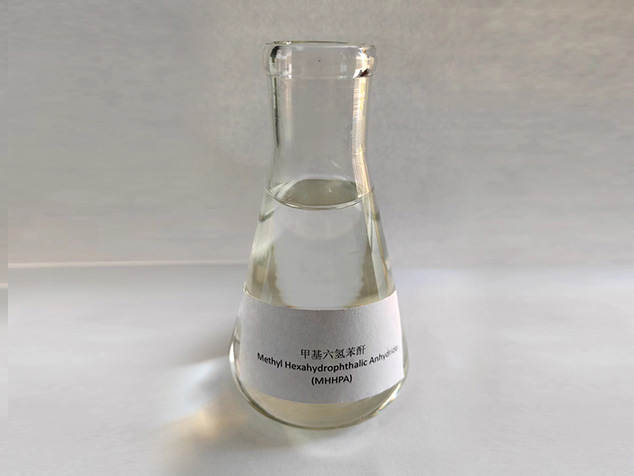
Methyl Hexahydrophthalic Anhydride (MHHPA)
Product Name: Methylhexahydrophthalic anhydride
Other Names: MHHPA
Formula: C9H12O3
CAS No. 25550-51-0
Quality Indicators:

Methylhexahydrophthalic anhydride (MHHPA)
Methylhexahydrophthalic anhydride (MHHPA) is an organic compound that belongs to the carboxylic acid anhydrides and is important in the chemical industry, primarily as a hardener for epoxy resins. The substance is also used as an intermediate in the manufacture of polyester resins and polyurethane. Methylhexahydrophthalic anhydride gives plastics a high resistance to UV radiation and weathering. Due to this property, the compound is used, among other things, in the production and processing of coatings, adhesives, high-performance LEDs and electrical and electronic components for outdoor use. The production of methylhexahydrophthalic anhydride is based on processes of hydrogenating methyltetrahydrophthalic anhydride.
At PENPET you get methylhexahydrophthalic anhydride (MHHPA) of the highest quality – from a reliable partner who will also meet your requirements in the long term. We look forward to receiving your inquiry for an individual offer. Prompt delivery of the liquid compound can be made in packages with different weights.
CAS no. 25550-51-0
EINECS no. 247-094-1
Molecular formula: C9H12O3
Synonyms: MHHPSA, MHHPA, Hexahydromethylphthalic anhydride, Hexahydromethyl-1,3-isobenzofuranedione, Methylcyclohexane-1,2-dicarboxylic anhydride, 7a-methyl-4,5,6,7-tetrahydro-3aH-2-benzofuran-1,3-dione
Areas of application: Hardener for epoxy resins, plasticizer, raw material for the production of polyurethane and polyester

Structural formula of Methylhexahydrophthalic anhydride (MHHPA)
Specifications
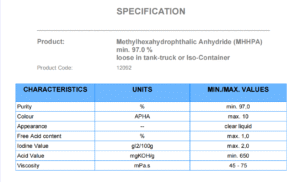
Performance Characteristics :
Colorless transparent liquid, basically does not change color after adding accelerator, epoxy curing material white color;
The complex composed of aliphatic epoxy resin has low viscosity, long application period good heat resistance and high temperature electrical properties.
There is no double bond in the molecular structure, and the cured epoxy resin has good weather ability and aging resistance without being affected by light and heat.
The molecular structure is relatively non-polar, curing material has good moisture resistance:
High reactivity, quick curing, short gel time, high thermal deformation temperature of thecured material.
Main uses:
1. Epoxide curing agent:
It can be used for impregnation of electrical equipment coils andcasting of electrical components and sealing of semiconductors, such as casting outdooiinsulators, light-emitting diodes(LED), ignition coils, capacitors for special purposes, transformersmotors, sports and entertainment equipment and other fields requiring good resistance to outdoor ultraviolet light and moisture resistance.
2. Epoxy matrix composite material:
Its application with fiber reinforcedmaterials inlamination, centrifugal casting, pultrusion molding and otheraspects has been paid more andmore attention.Such as pressure cylinders, pressure lines, fishing rods, golf clubs, etc.
3. Adhesive:
MHHPA made of aliphatic epoxy adhesive refractive index and optical glass similar, after curing, small internal stress, high bonding strength, no color, aging resistance, suitable for large area of optical parts bonding.
Application
1.Epoxy resin curing agent : MHHPA is a heat curing type acid anhydride curing agent. It is mainly used in electrical and electronic fields. It has good high temperature and electrical performance. It can be used for the immersion of electrical equipment coils and the casting of electrical components and semiconductor sealing. Casting outdoor insulators, light-emitting diodes (LEDs), ignition coils, special-purpose capacitors, transformers, motors, sports and entertainment equipment, etc., which are required to resist outdoor ultraviolet light and moisture resistance. 2.Epoxy composites : in combination with fiber reinforcement in lamination, centrifugal casting, pultrusion, etc., such as pressure cylinders, pressure pipes, fishing rods, golf clubs, etc. 3.Adhesive : The refractive index of alicyclic epoxy adhesive made of MHHPA is similar to that of optical glass. It has small internal stress after curing, high bonding strength, no discoloration and aging resistance. It is suitable for bonding large-area optical parts.
Methylhexahydrophthalic anhydride (MHHPA), as an anhydride of hexahydrophthalic acid, is a cyclic but non-aromatic compound. The molecules of the substance consist of the hexagonal ring of phthalic acid, which has lost its aromatic character through hydrogenation, and a second, pentagonal cyclic structure, formed through the dehydration of the two carboxy groups of phthalic acid. In addition, the compound has a methyl radical attached to one of the two carbon atoms that connect the two ring structures.
For a precise naming of the substance, the alternative name methylcyclohexane-1,2-dicarboxylic anhydride is suitable, which expresses the exact structure. Methylhexahydrophthalic anhydride has two isomeric compounds, each with the methyl group attached to a different carbon atom.
Physical and chemical properties
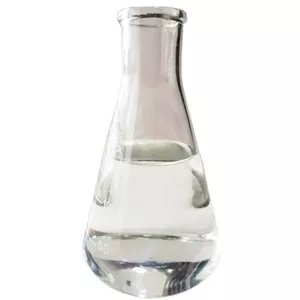
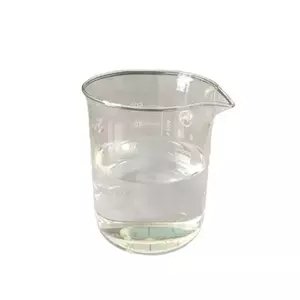
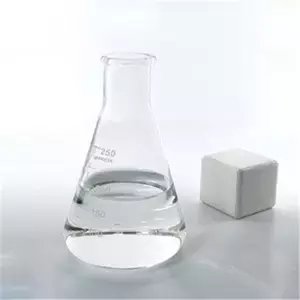
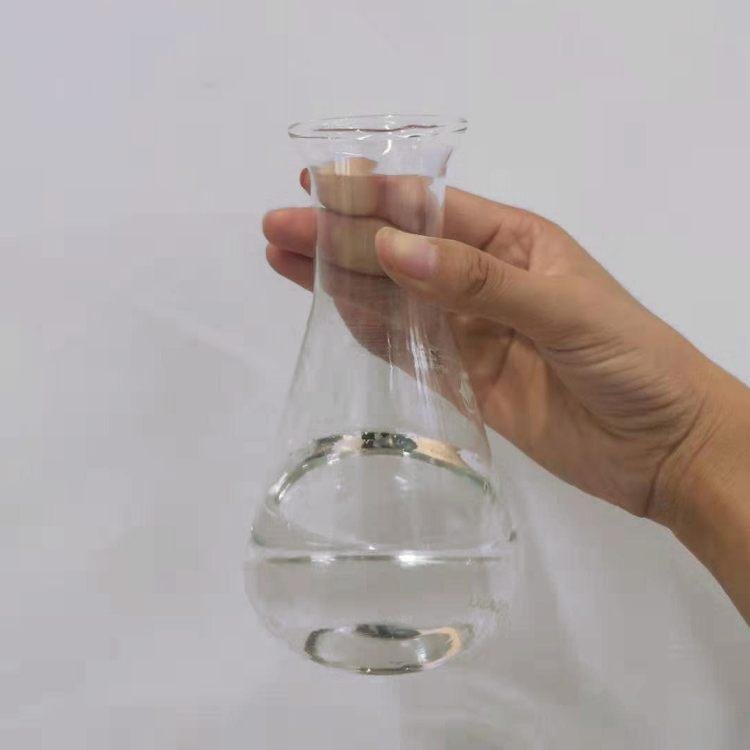
Under normal conditions, methyl hexahydrophthalic anhydride (MHHPA) is a colorless, viscous liquid. The compound solidifies on cooling below the melting point of -40 °C and boils at a temperature of 299 °C. The substance is only soluble in water with hydrolysis.
Stability and reactivity
Methylhexahydrophthalic anhydride (MHHPA) is chemically stable when stored as directed. However, the substance can easily crystallize when it comes into contact with humidity. Dissolution in water leads to the conversion of the compound into acids. Methylhexahydrophthalic anhydride is a combustible, but difficult to ignite substance. Harmful gases are produced when the compound is burned. Large amounts of carbon monoxide and carbon dioxide can be released, among other things.
Toxicology information
According to the GHS classification, methyl hexahydrophthalic anhydride (MHHPA) is a hazardous substance that poses acute and chronic health risks. The compound causes severe redness, irritation and chemical burns on the skin. Persistent sensitization and allergic reactions are possible. Wetted parts of the body should be cleaned thoroughly with soap and water. If symptoms persist, a medical examination must be arranged. Contact can cause severe and painful eye irritation. The affected eye should be rinsed immediately with water and examined by an ophthalmologist.
Inhalation of methylhexahydrophthalic anhydride vapors or aerosols may cause respiratory irritation, coughing, and asthmatic breathing difficulties. If the substance is swallowed, gastrointestinal symptoms and painful irritation of the mouth, esophagus and stomach may occur. If large quantities are ingested, severe chemical burns of the digestive tract are possible.
Due to possible damage to aquatic organisms, methylhexahydrophthalic anhydride is considered a slightly water-polluting substance that must not get into water bodies, wastewater or the soil. In the event of leakage of larger quantities into the environment, the local authorities must be informed. Methylhexahydrophthalic anhydride is not subject to any special transport regulations.
Packaging storage:
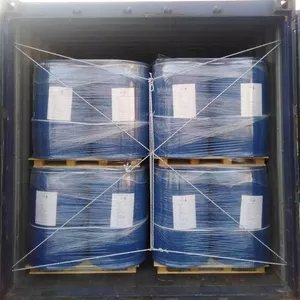
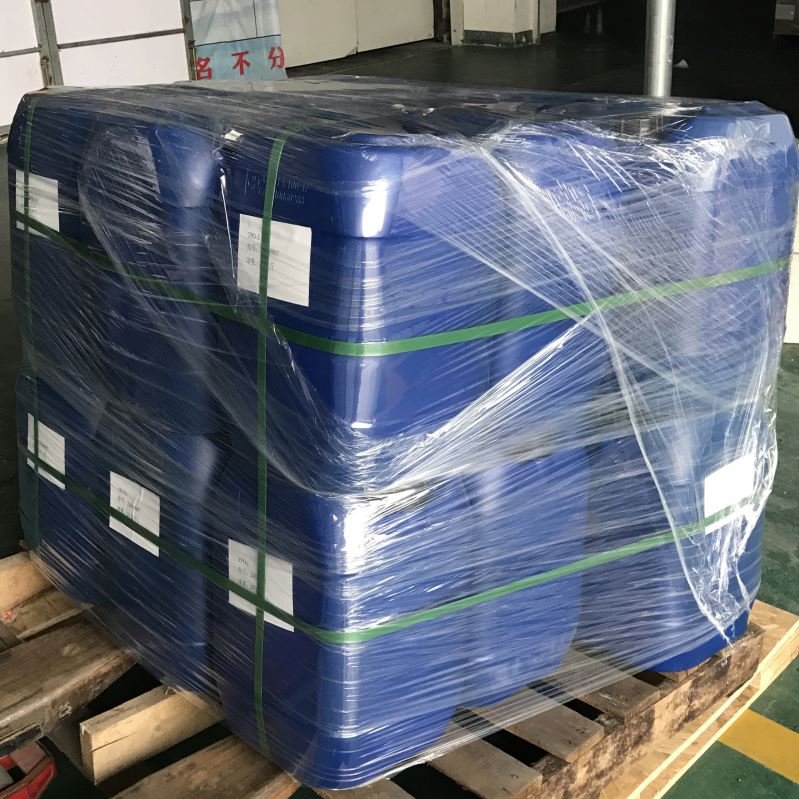
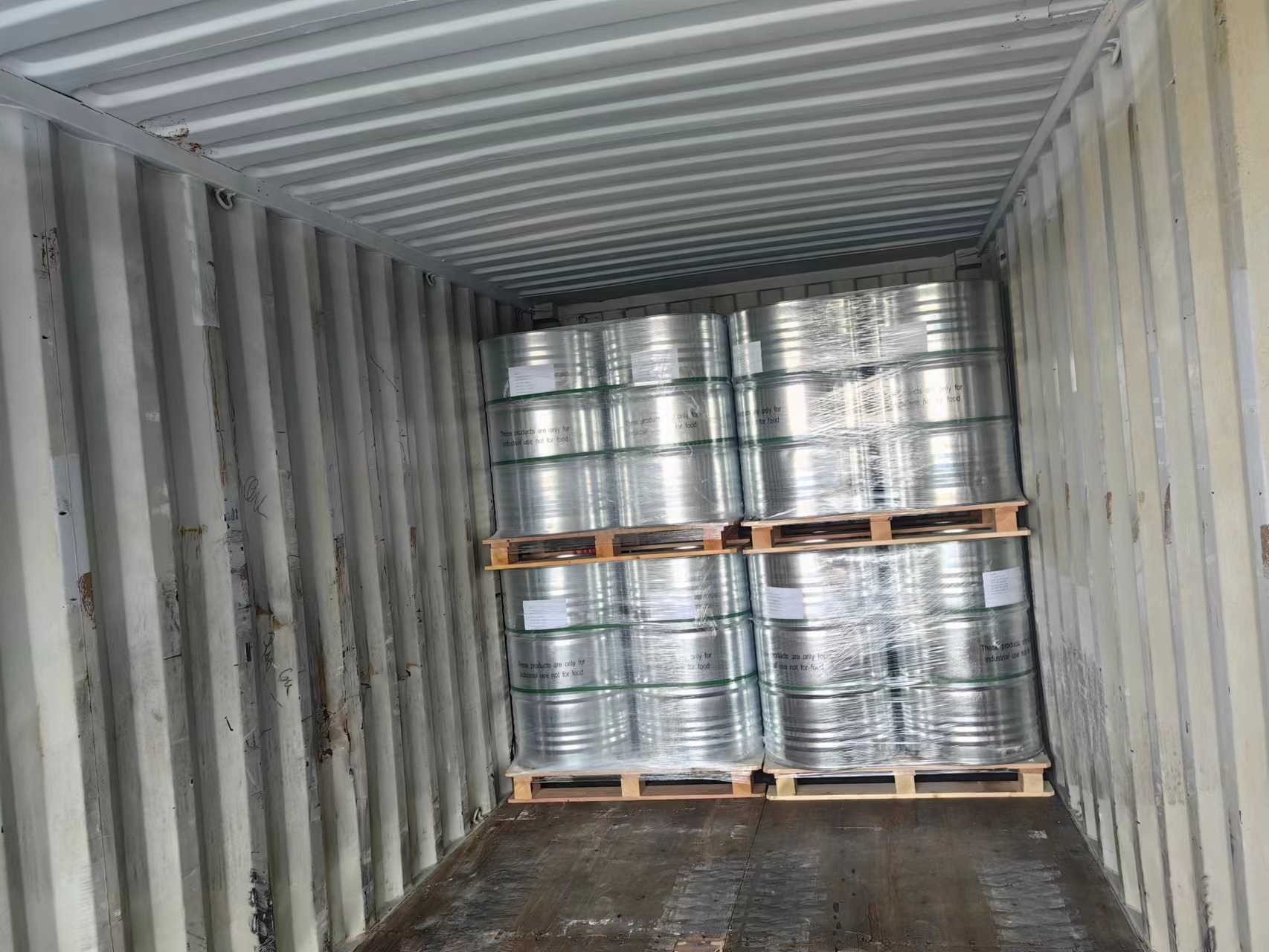
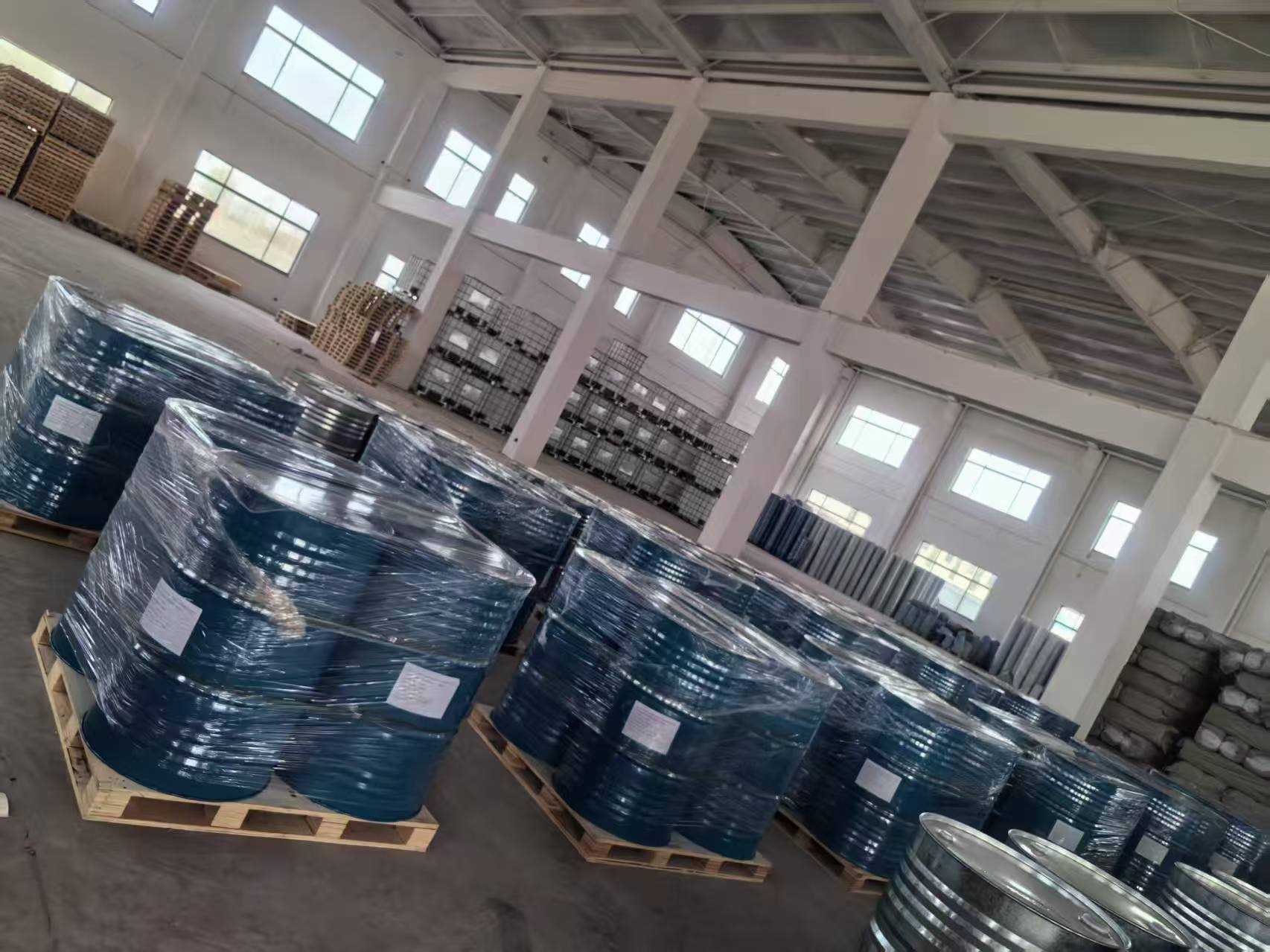
20 kilograms, 25 kg, 220 kg and 240 kg lBC barrel packaging. The performance of this product is stable. During storage and transportation, attention should be closedmoistureproof,fireproof and waterproof, lt is stored in a dry and ventilated warehouse and stored at room temperature for one year.
Depositor-Supplied Synonyms
- Methylhexahydrophthalic anhydride
- 25550-51-0
- 48122-14-1
- MHHPA
- Hexahydro-1-methylphthalic anhydride
- EINECS 256-356-4
- hexahydromethyl-1,3-isobenzofurandione
- Hexahydromethylphthalic anhydride
- CHEBI:55461
- 3a-methylhexahydro-2-benzofuran-1,3-dione
- methyl-1,2-cyclohexanedicarboxylic anhydride
- EINECS 247-094-1
- 1,3-Isobenzofurandione, hexahydromethyl-
- Hexahydro-3a-methyl-1,3-isobenzofurandione
- DTXSID70964009
- EC 247-094-1
- RefChem:818620
- DTXSID1029330
- DTXCID20857210
- 1,3Isobenzofurandione, hexahydromethyl
- 1,2Cyclohexanedicarboxylic anhydride, methyl
- 256-356-4
- 3a-Methylhexahydroisobenzofuran-1,3-dione
- Methylhexahydroisobenzofuran-1,3-dione
- MFCD22690873
- 7a-methyl-4,5,6,7-tetrahydro-3aH-2-benzofuran-1,3-dione
- 1,3-Isobenzofurandione, hexahydro-3a-methyl-
- 3a-methyl-octahydro-2-benzofuran-1,3-dione
- Epitope ID:122963
- SCHEMBL15660
- methylhexahydrophtalic anhydride
- methyl hexahydrophathalic anhydride
- 1-methyltetrahydrophthalic anhydride
- 2-Methyl-hexahydrophthalic anhydride
- 7a-methyl-4,5,6,7-tetrahydro-3aH-isobenzofuran-1,3-dione
- 3a-Methyl-5,6,7,7a-Tetrahydro-4H-Isobenzofuran-1,3-Dione
| ACF Chemical Co., Ltd. Athena phone/whatsapp:008613805212761 email:ceo@acfchemical.com No. 45 Pengwan Road, Qianwan Bonded Port Area, Qingdao Area, China (Shandong)welcome to vist our factory. sample is free ACF Chemical Qingdao Co., Ltd. was established in 1987. the company has over decades of experience in the production of methacrylate and acrylate series products, as well as high-efficiency polymerization inhibitors and rubber and plastic antioxidant series products. The company’s leading products are high-efficiency polymerization inhibitor series products, with an annual production capacity of 1,000 tons of tert-butylhydroquinone (TBC), 800 tons of polymerization inhibitor TH-701, 500 tons of polymerization inhibitor TH-A294, 500 tons of polymerization inhibitor TH-100BE, 500 tons of phenothiazine, and 200 tons of hydroquinone. |
|
| Product | CAS: |
| Poly(VinylEthylEther | 25104-37-4 |
| Dodecyl methacrylate,LMA | 142-90-5、142-84-7 |
| DAIP DIALLYL ISOPHTHALATE | 1087-21-4 |
| 2-Ethylhexyl nitrate | 27247-96-7 |
| Isopropylphenyl phosphate | 68937-41-7 |
| 2-1sopropylimidazole | 36947-68-9 |
| HydrogenatedTallowAmine | 61788-45-2 |
| Vinyl 2-Ethylhexanoate | 94-04-2 |
| Tolylene-2,4-diisocyanate UNATE T-100 | 584-84-9 |
| Octyl-3,5-di-tert-butyl-4-hydroxy-hydrocinnamate | 125643-61-0 |
| Antioxidant 1010 | 6683-19-8 |
| Antioxidant 1076 | 2082-79-3 |
| AT-168 | 31570-04-4 |
| Nitrilotrimethylenetris(phosphonic acid)ATMP | 6419-19-8 |
| DTPMPA [[(phosphonomethyl)imino]bis[ethane-2,1- diylnitrilobis(methylene)]]tetrakisphosphonic acid |
15827-60-8 |
| PBTC 2-phosphonobutane-1,2,4-tricarboxylic acid |
37971-36-1 |
| Hydrolyzed Polymaleic Anhydride(HPMA) | 26099-09-2 |
| Methyltetrahydrophthalic andhydride(MTHPA) | 11070-44-3 |
| Methylhexahydrophthalic andhydride(MHHPA) | 25550-51-0 |
| 4-MHHPA Hexahydro-4-methylphthalic anhydride | 19438-60-9 |
| Methyl Nadic Anhydride(MNA) | 25134-21-8 |
| 3,4,5,6-THPA 3,4,5,6-Tetrahydrophthalic anhydride | 2426-02-0 |
| TETREDM Tetraethylene Glycol Dimethyl Ether |
143-24-8 |
| Toluenesulfonamide(0/PTSA) | 1333-07-9 |
| Diphenyl sulfone(DPS) | 127-63-9 |
| PROPYLENE GLYCOL MONOMETHYL ETHER ACETATE(PMA) | 108-65-6 |
| PROPYLENE GLYCOL MONOMETHYL ETHER (PM) | 107-98-2 |
| BUTYL GLYCOL ACETATE(BGA) | 112-07-2 |
| DIPROPYLENE GLYCOL DIMETHYL ETHER(DPDM) | 111109-77-4 |
| ETHYLENE GLYCOL DIMETHYL ETHER (EDM) | 110-71-4 |


